Citizen science demonstration protocol for the preparation of Zero-Waste Seaweed Coatings for Cosmetics

The Zero-Waste Coatings for Cosmetics technology aims to completely eliminate single-use bottles in the cosmetics sector. It addresses key environmental and industry challenges, including:

Plastic waste reduction: Global single-use packaging exceeds 100 billion units annually, with a large share going underutilized, especially in hospitality. Our innovation provides a zero-waste, plastic-free alternative that reduces waste at the source.

Consumer habit transformation: By offering an easy-to-use, zero-waste packaging option, the solution encourages individuals and businesses to adopt sustainable consumption practices, with particular impact in sports training centers and high-tourism areas.

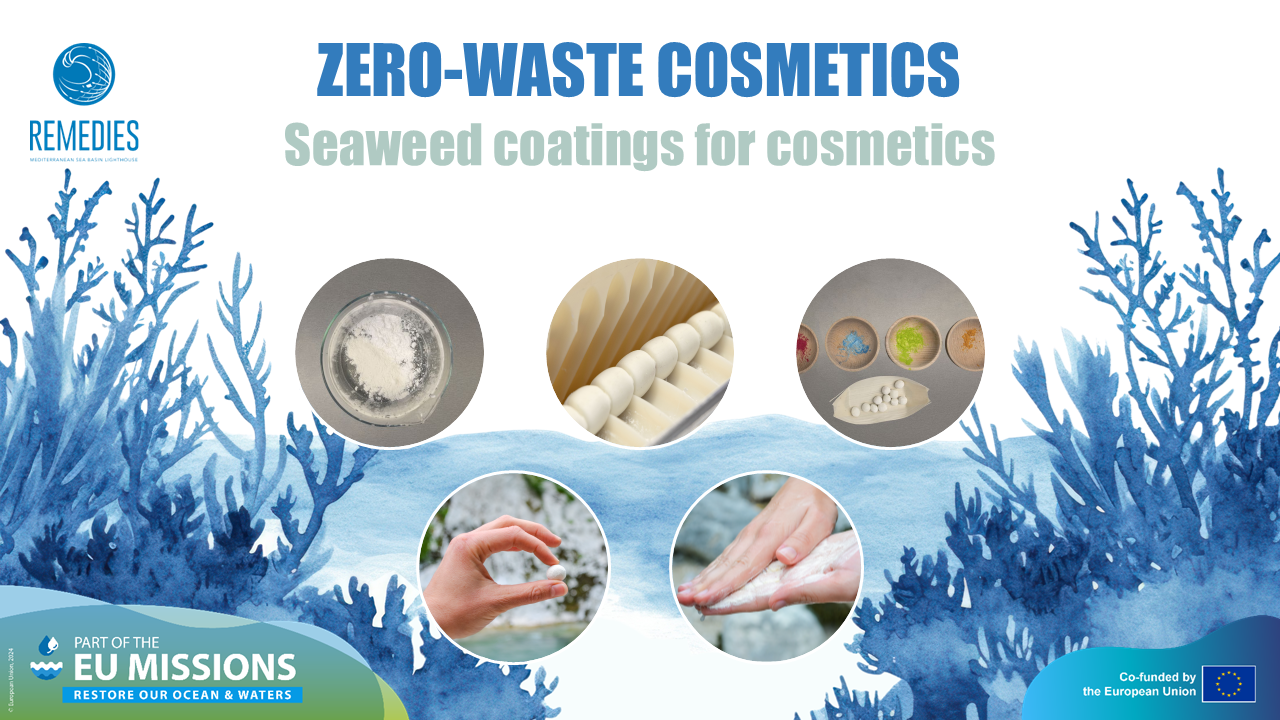
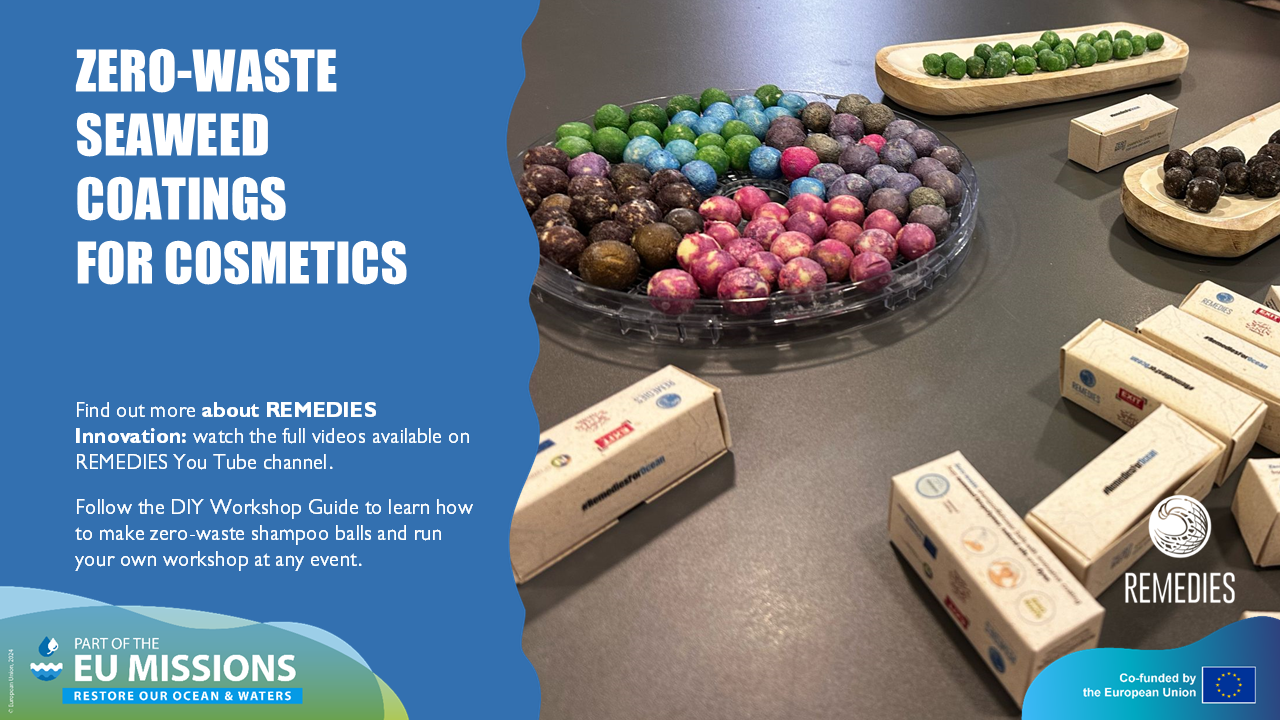
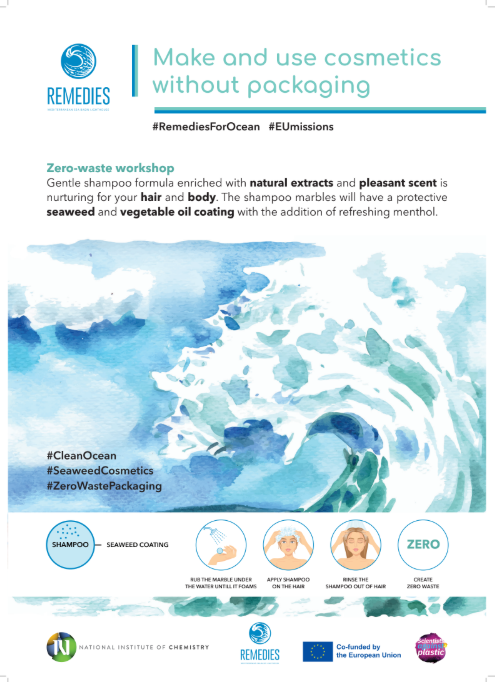
Zero-Waste Seaweed Coatings offers a novel, biodegradable seaweed-based coating that eliminates plastic containers by encapsulating cosmetic products in dissolvable zero-waste “cosmetic balls.” This innovation targets high-waste areas such as tourism, hospitality, and sports, helping replace single-use bottles with sustainable, zero-waste solutions.

The citizen science demonstration activity engages citizens in identifying zero-waste solutions in cosmetics. Participants will be familiarized on the basics formulation of cosmetics (shampoo, gels, creams, soap) and test performance of seaweed-based coatings prototypes, and share feedback on usability and sustainability. Their contributions provide valuable data on consumer behaviour and help validate the acceptance of alternative solution to plastic bottles for storage of the cosmetics.

By involving citizens as active collaborators, the scientist  citizen demonstration initiative promotes awareness and behavioural change while supporting small businesses in transitioning toward circular practices. It aligns with the REMEDIES project’s goals to prevent plastic waste at the source, foster material innovation, and engage society in building a zero-waste, circular blue economy.

OBJECTIVES

The activity aims to raise awareness about plastic waste in cosmetics, test the DIY seaweed zero-waste coating method, and collect citizen-generated data to support sustainable innovation. Through interactive workshops, participants will experiment with creating biodegradable cosmetic coatings, reflect on their usability and environmental impact, and share feedback through surveys.

The purpose of this research is to understand participants’ opinions and experiences related to the workshop. Their anonymous responses will provide valuable insights into public perception, acceptance, and the educational impact of zero-waste solutions. The collected data will contribute to improving the method, informing future citizen science activities, and supporting dissemination at upcoming events on sustainable development and circular living.

TARGET GROUP

The activity is intended for the general public, particularly youth, students, and eco-conscious citizens interested in sustainability, circular design, and zero-waste lifestyles. It also targets local communities, including individuals from tourism, hospitality, and creative sectors, who can apply zero-waste solutions in their daily practices.

Special emphasis will be placed on engaging teaching institutions where young adults and local innovators in cosmetics can act as multipliers – spreading knowledge, inspiring behavioral change, and fostering community-driven environmental awareness.

Watch the Video Tutorials

MATERIALS & TOOLS NEEDED

List all required materials and tools:

  • Ingredients:

Shampoo dough for balls mixture of:

  • 40% Tapioca starch
  • 60% Any type of liquid shampoo

Seaweed coating:

  • 4g Stearic acid
  • 2g Sodium alginate
  • 80ml Water (aqua)
  • 1g Calcium Chloride
  • 70 g 96% Ethanol
  • 75 g Dehydrated liquid shampoo
  • Equipment:
    • 1 large metal bowl
    • 2 small metal bowls
    • 1 wooden bowl
    • 1 spoon
    • 2 small sieves
    • 1 tray
    • Dehydrator/dryer (optional)
    • Handheld stick blender (optional)
    • Press gun (optional)
    • Container for the balls (optional)
  • Digital tools:
    • Mobile phone or computer
    • TV or projector and projector screen
  • Templates and forms (e.g. data sheets, consent forms)
    • Zero-waste cosmetics Survey (before & after)
    • Zero-waste product satisfactory sheet 

STEP-BY-STEP PROCESS

Preparation

  • Prepare a clean work surface (steel or wooden countertop/tray)
  • Prepare the listed equipment and tools
  • Measure and prepare all the listed ingredients

Activity implementation

Mixing of the shampoo dough: 

  • Into 750 g of dehydrated shampoo (water content below 40%), mix 500g of Tapioca Starch (approximately 1/3 at a time). 
  • First, mix the ingredients with a spoon, then knead with your hands.

(The shampoo dough is ready when it no longer sticks to your hands or the bowl.)

Making of shampoo balls with press gun: 

  • Spread tapioca starch with a sieve on a wooden surface.
  • Use a spoon to transfer the shampoo dough into the press gun.
  • Apply pressure to the press gun handle to make lines of shampoo dough.
  • Cut the shampoo dough into equal pieces, approximately 1-1.5 cm wide.
  • Take one piece in your hand and use the other hand to shape it into a ball.

(Lightly dust your hands with starch before starting.)

  • Place the balls on a surface and avoid them touching each other.

OR

Making of shampoo balls with ball machine: 

  • Take approx. 30g of the dough and roll it into a 30 cm-long shape with a diameter of about 2 cm. 
  • Add some tapioca starch to the ball machine, then place the 30 cm shampoo dough inside. Gently press the dough to position it in place. 
  • Turn the lever clockwise until all the shampoo balls drop out to the tray below.
  • Place balls on a surface and avoid them touching each other.

Preparing coating solution 1:

  • Add 20g of sodium alginate and 5 g of tapioca starch to 500 ml of water.
  • Blend until fully dissolved (approximately 3 minutes).

Preparing coating solution 2:

  • Add all ingredients into one beaker: 40 g Stearic acid, 10 g Calcium Chloride, 1 g Menthol (optional), 300 ml Water, 700 g 96 % Ethanol.
  • Blend until fully dissolved.

Coating the shampoo balls:

  • Add 3 tablespoons of Zero-waste seaweed Coating (solution 1) to a small wooden bowl.
  • Wet the sieve with Seaweed Coating Solution, then add the shampoo balls. 
  • Swirl the shampoo balls in the sieve to achieve a glossy finish.
  • OPTIONAL step: Place the shampoo ball in the wooden bowl with pigment, then swirl until the pigment covers the surface. You can repeat the steps for adding multiple pigments.
  • Prepare a larger bowl with a seaweed crosslinking solution (solution 2).
  • Transfer shampoo balls to the bowl with Seaweed crosslinking Solution. 
  • Let the balls sit for at least 10 seconds.
  • Pick up the coated shampoo balls.
  • Place the shampoo balls in a container to dry, or let the excess liquid evaporate for a few minutes.

Zero-Waste Packaging Options:

  • Refillable container – for home use.
  • Shelf storage without packaging – a minimal-waste option.
  • Paper box – ideal for travel.

How to use it:

  • Take the shampoo ball and start rubbing it between your hands under the water until it foams.
  • Apply shampoo to your hair and body 
  • Rinse with water
  • Leave zero-waste behind.

One shampoo ball is for a single use.

Store the shampoo balls in a safe, out-of-reach space for children.

Documentation (how data will be recorded and stored)

The final user experience will be evaluated through an online product satisfaction survey completed after testing the zero-waste cosmetics in various settings, including at home, hotels, campsites, on the beach, at school, in the gym, and other locations. The survey sheet is available in a Google Form. The specially marked section will be used to collect citizen data, which will be added to the public REMEDIES dashboard.


ADDITIONAL MATERIALS

Do it yourself protocols for Zero-waste seaweed coating for cosmetics using standard protocol or its upgrades with machine for creating shampoo balls (pdf) and using colours to make your unique coatings (pdf) 

Discover more supportive documents on citizen science demonstrations (infographics, FAQ):

General Survey on Zero-waste cosmeticsWorkshop Survey for Workshop participants

Discover more supportive documents for workshop organizers:

Example of the Intro to the WorkshopSupportive Promotional Flyers for the Workshop

ADDITIONAL MATERIALS

for Citizen Science Workshop Organizers

You may include the following information in your Citizen Science protocol document to help others organize a well-structured Citizen Science workshop and tailor it to their needs. Alternatively, you may keep these guidelines for your own internal use.

  1. Pre- & Post-Questionnaires

Before the activity:

  • Distribute a pre-questionnaire to measure baseline knowledge or behaviors on zero-waste cosmetics. 

After the activity:

  • Distribute a post-questionnaire on:

After the activity:

  • Distribute a post-questionnaire on:
  • Workshop experience and satisfaction
  • Difficulties faced
  • Suggestions for improvement
  • Whether they would recommend or repeat the activity
  1. Safety & Ethical Considerations
  • Consent and data privacy procedures should be implemented where necessary, ensuring compliance with relevant ethical and data protection standards.
  • In cases where videos or photos are collected for public dissemination, reporting, or promotional purposes, a consent form must be prepared and signed by all workshop participants to protect their rights and comply with GDPR requirements.
  • A mandatory safety briefing prior to the operation of the ball machine and any other tools or equipment used during the workshop.
  • Presentation materials will be designed to be inclusive and accessible, taking into consideration the needs of vulnerable groups such as individuals with epilepsy, dyslexia, or other specific conditions.

Explore More: The REMEDIES Citizen Science Manifesto

Learn how REMEDIES empowers citizens across Europe and the Mediterranean to actively monitor and reduce marine plastic pollution. Discover how you can take part and benefit from the free, open-source tools and inclusive processes available to all.

Visit the Citizen Science dedicated blog post of the REMEDIES website

REMEDIES Citizen Science Manifesto