

The Koper Demo Site in Slovenia focuses on Detection and Monitoring, Collection and Valorisation, and Prevention and Zero Waste, with particular attention to beach litter, microplastics, marina pollution, and citizen engagement. Koper is Slovenia’s fifth largest city and a strategic coastal point connecting Central and South-East European markets with the Mediterranean Sea and the Far East. The Demo Site is closely linked to Marina Izola, located only a few kilometres from Koper, a long-standing Blue Flag marina and a growing destination for leisure boating.
Watch a visual introduction of the Koper Demo Site:
The Slovenian Demo Site is led by the University of Maribor (UM), with the involvement of CLERA, National Institute of Chemistry Slovenia (NIC), and Marina Izola. Its work addresses one of the key pollution pressures in marina environments: wastewater generated from vessel maintenance and paint washing, which can contain biocides, heavy metals, and microplastics. Through REMEDIES, the site combines wastewater treatment, beach clean-ups, seasonal beach litter monitoring, underwater drone mapping, microplastic detection, and citizen engagement. The expected outputs include retaining 99% of microplastics and other toxins in wastewater, mapping 20 km² of seabed to identify large plastic debris, organising 20+ beach clean-up events, and contributing seasonal beach litter monitoring data from 8+ campaigns to the EMODnet database.
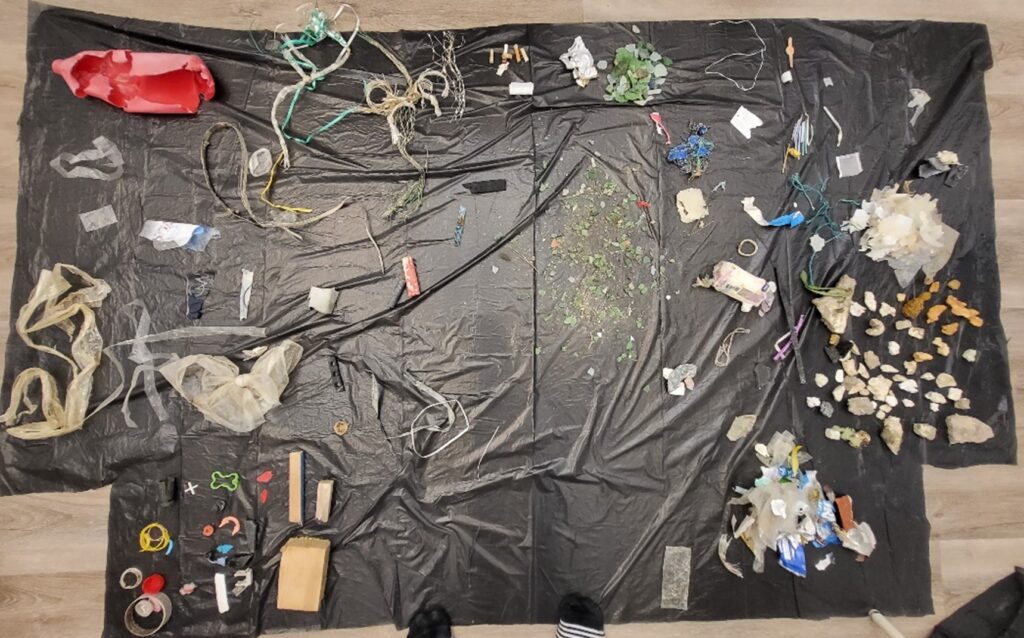
The work began with a strong monitoring foundation when the University of Maribor (UM) adopted a 100-metre section of the Slovenian coastline at Bele Skale through the “Adopt your piece of the coast” initiative led by the Public Institute Landscape Park Strunjan. Starting in January 2024, this section was reserved for seasonal beach litter monitoring under REMEDIES, to be conducted four times per year over three years by scientists from the University of Maribor (UM) and the National Institute of Chemistry. Identified litter is categorised through the monitoring app and portal developed by Infordata, and the collected data is sent to EMODnet as reliable information on marine litter trends in Slovenia.
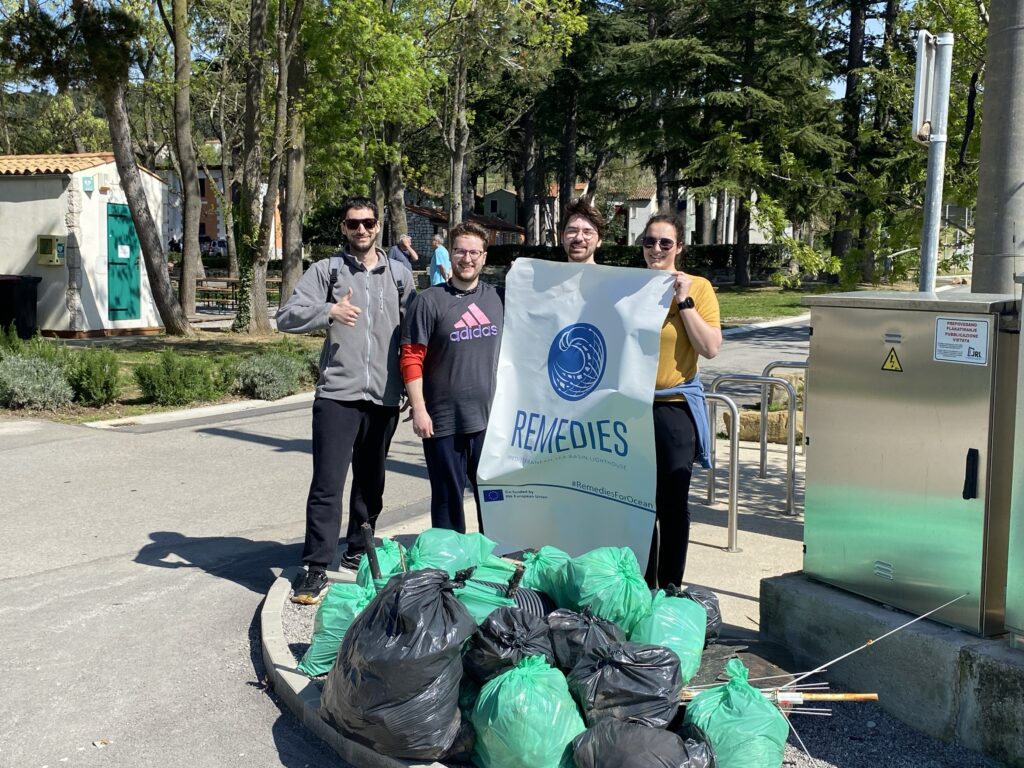
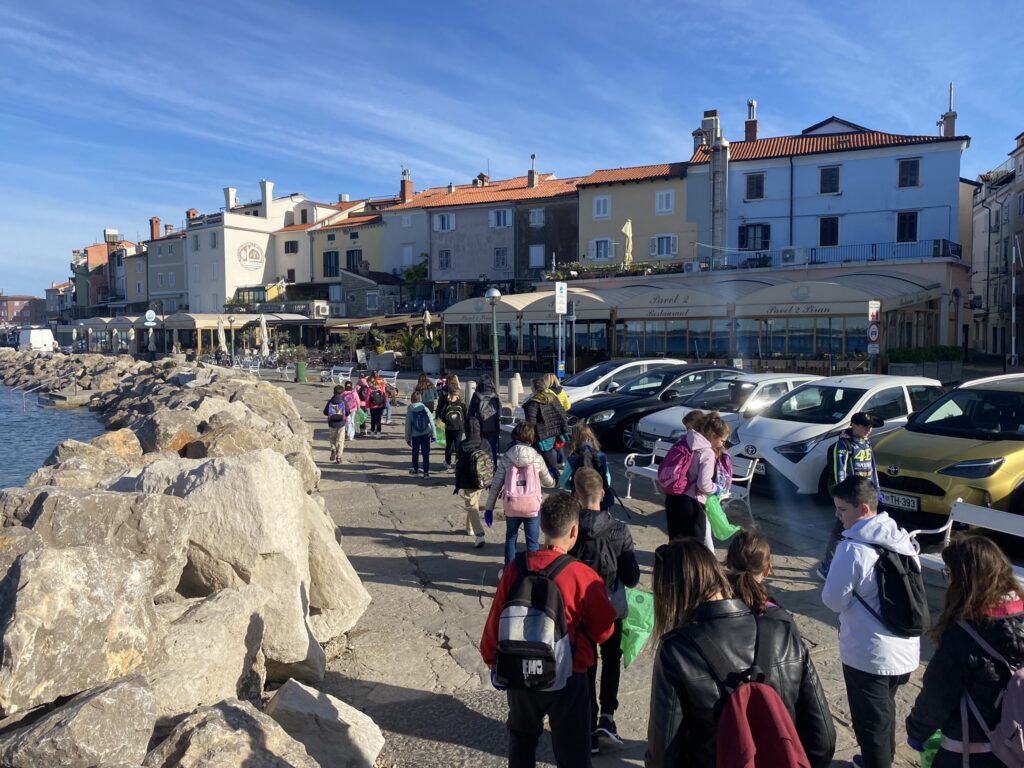
In April 2024, the Demo Site combined community action with technical testing through clean-ups, beach litter monitoring and drone tests along the Slovenian coast. On 6 April 2024, University of Maribor (UM) researchers joined the Municipality of Ankaran and more than 100 participants of all ages, including children, youth, and pensioners, to clean the coastal area around Ankaran and Debeli Rtič Landscape Park. The action collected 124.8 kg of plastic waste and 41.2 kg of other waste, showing the importance of community engagement alongside scientific monitoring.
The Koper Demo Site is closely connected to two core REMEDIES technologies that bring together marine litter detection, microplastic monitoring, and pollution prevention at source. The first is the Underwater Drone Technology, developed by Clera.One in collaboration with Mohammed Premier University (MOH), Infordata, and National Research Council of Italy (CNR). This technology is designed to support the detection and monitoring of marine litter, including both macroplastics and microplastics, in marine and coastal environments. Equipped with AI algorithms and specialised sampling filters, the drones can help map the seafloor, identify large plastic items, and collect repeated data on microplastic presence over time. In practical terms, this allows local actors to move from one-off clean-up actions to more systematic, evidence-based monitoring, where pollution hotspots can be identified, compared, and prioritised for intervention. At Marina Izola, the technology was demonstrated as part of the Koper Demo Site activities, showing how underwater monitoring can support cleaner marina environments, better-informed clean-up planning, and long-term data collection for marine litter assessment. The technology is also presented in the REMEDIES Innovation Marketplace as an underwater drone for marine litter detection, highlighting its potential as a scalable tool for coastal authorities, researchers, environmental organisations, and marina operators.
The second key innovation tested through the Koper Demo Site is the Microplastic Filtration System Clera.One, an advanced decentralised wastewater treatment technology designed to capture microplastics directly at the source. In marina environments, wastewater from boat maintenance, cleaning, and antifouling paint rinsing can carry microplastics, biocides, heavy metals, and other pollutants into the sea. Clera.One addresses this risk by treating wastewater on site before it re-enters natural water bodies. Its modular design makes it suitable for different operational contexts, including marinas, laundry services, cruise services, industrial wastewater facilities, and environmental organisations working on pollution prevention. It also supports a circular economy approach by reducing dependence on large centralised infrastructure and opening pathways for the recovery and repurposing of captured microplastics and other resources. The technology has been tested at the Koper Demo Site and is also featured in the REMEDIES Innovation Marketplace as the Clera.One microplastic filtration system, with the ambition to reach TRL 8 by the end of the REMEDIES programme in 2026.
From March to May 2026, the University of Maribor (UM) led the REMEDIES Anti-Litter Campaign in Slovenia, co-organised by CLERA, National Institute of Chemistry Slovenia (NIC), and Infordata. The campaign brought together monitoring, data generation, technology demonstrations, and plastic pollution prevention at source. It targeted local municipalities, coastal authorities, NGOs, marina operators, tourism actors, researchers, students, technology developers, and citizens, strengthening cooperation between science, industry, local authorities, civil society, and the wider public. The campaign also positioned the Slovenian pilot within EU-level marine litter data frameworks and Mission Ocean objectives.
A key milestone was the REMEDIES Open Day at Marina Izola on 18 March 2026, which officially launched the Slovenian Anti-Litter Campaign. Organised by the University of Maribor (UM) with the support of You(r)Sea Institute, ZRS Koper, Marina Izola, CLERA, Infordata, and National Institute of Chemistry Slovenia (NIC), the Open Day brought together stakeholders from research, industry, local authorities, and civil society. Participants joined an in-person seminar on plastic identification and marine litter science, explored pilot activities at the Koper Demo Site, and took part in live demonstrations at Marina Izola, including underwater drone monitoring for seafloor mapping and a microplastic filtration system treating wastewater from boat maintenance activities. The Slovenia Edition of the PLASTIC FANTASTIC Seminar also created space for citizens, stakeholders, and decision-makers to exchange practical knowledge. The event can be supported by the short Koper Demo Site video.
The same day also hosted the 7th REMEDIES Cluster Meeting, “Co-creating Local Innovations”, under the theme “Marina Izola as a Space for Sustainable Solutions for a Clean Sea.” The meeting highlighted the Koper demonstration area, scientific background on marine litter and plastic identification, REMEDIES filtration technologies, underwater monitoring technologies, waste monitoring data integration with European databases, and synergies with Horizon Europe projects including TASC-RestoreMed, RISTANC, INSPIRI, INSPIRE, HEMRIS, TEAMFORADRIS, and UPSTREAM. The programme concluded with on-site demonstrations of the filtration system at Marina Izola and underwater drone operation.
Together, the Koper Demo Site updates show how Slovenia is contributing to the REMEDIES mission through a strong combination of seasonal beach litter monitoring, community clean-ups, underwater drone testing, microplastic filtration, marine litter science, citizen engagement, and cross-sector collaboration. By working across Koper, Izola, Ankaran, and Bele Skale, the Demo Site demonstrates how coastal authorities, researchers, marina operators, technology developers, NGOs, and citizens can work together to prevent microplastics and marine litter from entering the sea.