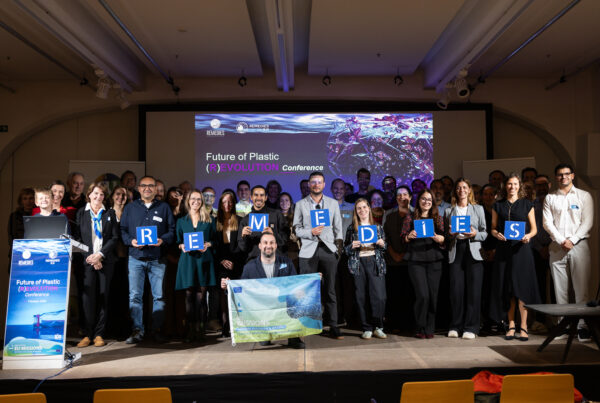

Supporting the beneficiaries of the REMEDIES Open Call from Pilot Action to Replication
A tailored support pathway, not just a grant
Both REMEDIES Open Calls supported Associated Regions in developing practical solutions against plastic pollution to implement aquatic ecosystem restoration solutions and contribute to the objectives of the REMEDIES project. The support was not limited to funding. It combined financial support, mentoring, technical assistance, implementation follow-up, and access to networking, capacity building, wider support for exploitation and financing tools.
Across the two Open Calls, five beneficiaries were selected. Two on Open Call 1, focused on Collection & Valorisation, supported (1) Island Guardians: For a Plastic-Free Med in Malta and (2) CLEANUP4Guimarães in Portugal. Three on Open Call 2, focused on Prevention & Zero Waste, supported (1) Unite for Plastic-Free Mersin Coasts! in Turkey,(2) No More Plastic in Kerkennah in Tunisia, and (3) MARICES in Montenegro.
Each beneficiary received up to €100,000 through the Funding Support for Third Parties mechanism. Open Call 1 included a six-month acceleration process, while Open Call 2 included an eight-month process, giving beneficiaries extended time to develop and complete their actions and amplify their impact.
Tailored mentoring for each Associated Region
Mentors from the REMEDIES consortium were assigned according to the needs of each project focus and actions, taking into account geographical proximity, technical expertise, and scientific knowledge. The focus was to provide added value as REMEDIES partners, aligned with the proposed project by the beneficiaries and support and verify the beneficiaries progress and impact. In the case of the Open Call 1 two mentors were assigned to one beneficiary and one to another beneficiary, from the total of the two selected beneficiaries. On the case of Open call 2, as it was an Acceleration process of 8 months, and due to the previews lessons learned from mentors in Open call 1, two mentors were allocated per beneficiary, so that a reinforce support would be provided, either my complementary expertise and in terms of time dedicated and support between mentors, in terms of the work, either with the minutes, report evaluations, etc.
Open Call 1 for associate regions – Collection and Valorization pathway
For Open Call 1, Esplora Interactive Science Centre was supported by National Institute of Chemistry Slovenia (NIC) explanations (e.g. budget rules, deviations in budget allocation) and approval of workplan focused in both technical implementation of the activities and contributed with strategic guidance as well as networking and dissemination opportunities (for example, speaking at REMEDIES Cluster Meeting at the EU Green Week and translation of the children’s story books into Slovene language, speaking at EU forum general panel) and Impact Hub Athens (IHA) that added their knowledge and expertise on communication and dissemination for a better impact and reach. These are some examples of actions that were implemented with the support of the REMEDIES partners: Beach clean-up following the REMEDIES protocol in T2.4 (Successful Beach Clean-Up at Bugibba Bay, Malta – Remedies); Art installation out of the plastic waste collected during the clean-ups (related to REMEDIES artist residencies in T6.5); Efficient dissemination via project website https://islandguardians.org/ and press conference (Esplora celebrates REMEDIES-funded project on marine plastic pollution in the Mediterranean, (6) Today, the closing event… – Esplora Interactive Science Centre | Facebook) as well as presentation at the Cluster Meeting (EU Green Week 2024). Moreover, a reversed replication took place as the storybooks created in their project were translated in Slovene to be used for raising awareness in workshops in kindergartens.
The Municipality of Guimarães was supported by River Cleaning (RC) with their inputs on the permitting process, impact-related risk management and communication. The beneficiary’s project combined riverine litter removal, public engagement, awareness-raising campaigns and valorisation of collected plastic waste. Therefore, the mentoring activity supported both operational implementation and communication-oriented impact, with particular attention to permissions, KPI tracking, stakeholder mobilisation, deviations and final reporting.
Open call 2 for Associated Regions – Prevention and zero-waste
On Open Call 2, Mersin Metropolitan Municipality was supported by the National Technical University of Athens (NTUA), by delivering a comprehensive framework of technical assistance and strategic administrative mentorship to facilitate the progress of Open Call 2 beneficiaries and National Institute of Chemistry Slovenia (NIC), as co-mentor, offered detailed support with step-by-step explanations (e.g. budget rules) or organising online meetings and trainings (e.g. online training with Infordata on REMEDIES citizen science app work, clean-up training and reportings) to align with REMEDIES tools and workprocesses. Mentors / REMEDIES supported Mersin FreeUp Coasts by actively communicating it’s achievements through REMEDIES webpage (2 posts in news section), embedding Mersin’s efforts in wider Mission activities (Mersin contributed to the event of the BlueMissionMed Turhish Hub on 16 January 2025 and attended the 3rd Annual Mission Ocean and Waters Forum on 4 March 2025, Brussels). Similarly, Mersin’s team actively communicated FreeUp Coasts and REMEDIES and they produced 17 social media posts 15 videos 13 news articles. In total, Mersin’s activities reached an audience of over 14 thousand persons. Mersin organised a large final event with almost 80 in person participants. Mentors contributed with online presentation.
The DOO Komunalne djelatnosti Ulcinj had the mentoring support of the Environmental & Territorial Management Institute (ETMI) and EXIT, that combined their strategic guidance as a public management, as well as community engagement expertise. In the case of EXIT mentorship their extensive network, communication and dissemination experience, namely on stakeholders engagement supported a combined and complementary guidance towards a better awareness and impact of DOO Komunalne djelatnosti Ulcinj project implementation; the Municipality of Kerkennah was supported by SMILO, and Alchemia Nova Greece (ANGR). SMILO contributed its long-term expertise in sustainable island governance, strategic planning, and plastic waste reduction. Building on Kerkennah’s participation in the SMILO network since 2017 and its labelling process since 2020, SMILO helped integrate the Open Call project into the island’s broader territorial strategy. Alchemia Nova Greece (ANGR) supported the municipality by contributing its expertise in reclaiming secondary water resources and closing the water loop. Assisted by revising the workplan, the activities, the technical installations planned and provided input and guidance where required. This support contributed to the implementation of locally adapted actions, including the installation of two Kumulus atmospheric water generation fountains, rainwater harvest and reverse osmosis systems in all schools, the distribution of kraft paper bags at the local market, and workshops promoting traditional handicrafts using date palm materials as sustainable alternatives to plastic.
Mentoring process architecture
Logistically, the mentoring process included at least one monthly online meeting between each beneficiary and its mentors, as well as emails of follow up. These monthly meetings focused on supporting and following up the implementation progress: KPI and milestone follow-up, addressing challenges, sharing ideas and experience and definition of next steps. Meeting minutes and any additional information about the actions were stored in a common working folder, allowing a better communication flow between the mentors and the OC beneficiaries. The goal has been to create a clear record of progress and decisions. F6S, as the WP leader, also organised additional internal project meetings with the REMEDIES mentors to coordinate the process and create a support net between mentors, promoting the exchange of good practices, challenges and potential synergies between projects, namely in communication and dissemination and other opportunities.
The Acceleration process had 3 stages of payments, one at the integration of the process and the other two that the follow up and financing dependent on the reporting of the actions. Here the mentors had a fundamental role of confirming that all the process was completed as agreed and give the green flag, along the F6S, as the leader of the OC process, and coordinator, to trigger the payments as planned, according to the signed agreement between the beneficiaries and the REMEDIES project.
A key best practice was maintaining regular monthly meetings for collaborative problem-solving and exchange of ideas. Adjustments to timelines, dissemination plans, and educational materials were handled collaboratively and pragmatically.
Lessons Learned from the mentoring process (OC1 &OC2)
Administrative, Operational, and Seasonal Planning
- Map all competent authorities early: Project teams must identify and map all regional, municipal, and environmental permitting actors at the very beginning of a project. For the Guimarães Municipality beneficiary (CLEANUP4GUIMARAES project), pre-engaging the national Portuguese Environmental Agency was insufficient because the regional Northern Region Coordination Committee also held independent approval authority over the deployment of eco-barriers.
- Factor in administrative and seasonal constraints: Projects involving non-EU partners require significant operational lead time to navigate structural differences. The Metropolitan Municipality of Mersin beneficiary (FreeUp Coasts project) required mentoring support to resolve administrative questions regarding expenditure eligibility due to its non-EU status, language differences, and distinct currency. Furthermore, financing bodies must consider local weather when defining project timelines, as that had an impact in implementation; scheduling the peak of coastal fieldwork for the Mersin beneficiary during December and January created operational challenges.
- Combine remote governance with in-person interventions: Relying exclusively on online communication can stall progress when dealing with public actors who carry heavy operational workloads. The Kerkennah Municipality beneficiary (SMILO/Open Call project) demonstrated that while monthly remote meetings maintain general momentum, combining them with physical, on-site field visits significantly improves stakeholder engagement, accelerates decision-making, and strengthens local project ownership.
KPI Frameworks and Monitoring Adaptability
- Define flexible fallback indicators: Relying strictly on infrastructure deployment makes project reporting vulnerable to procurement bottlenecks. When procurement and legal delays stalled the installation of eco-barriers for the Guimarães Municipality beneficiary, the project team maintained impact tracking by shifting focus to alternative metrics, such as the mobilization of local volunteer groups and the collection of over 200 kg of plastic.
- Structure rigorous progress tracking tools: Implementing clear project management frameworks from day one stabilizes project execution. The Metropolitan Municipality of Mersin beneficiary successfully respected its implementation timeline by establishing early, explicit agreements on working methods, specifically utilizing Gantt charts and structured KPI tracking during regular monthly meetings.
- Align objectives with local capacities: Project goals must match the realistic baseline capabilities of the territory to minimize implementation friction. The Kerkennah Municipality beneficiary reduced operational difficulties by ensuring that its core project objectives directly aligned with existing local environmental priorities and municipal capacities.
Communication Strategy and Technical Adaptations
- Leverage existing channels and differentiate network capabilities: Utilizing established communication networks with pre-existing follower bases—such as the municipal, university, and landscape laboratory channels used by the Guimarães Municipality beneficiary—prevents audience fragmentation and amplifies visibility. However, teams must recognize that while local networks excellently drive citizen mobilization, they cannot bypass formal administrative or technical procurement procedures.
- Overcome language and technical barriers adaptively: Mentors and beneficiaries must proactively adapt to local communication limitations. To resolve technical limitations like poor internet connectivity and weak audio equipment, the mentor for the Kerkennah Municipality beneficiary systematically prepared visual PowerPoint presentations in advance to guide remote discussions. Furthermore, the team adopted a shared language (French) to eliminate communication barriers during detailed operational conversations.
- Deploy targeted support channels: While large group meetings keep the broader team informed, complex technical issues require specialized attention. The Metropolitan Municipality of Mersin beneficiary maintained its timeline by supplementing its large monthly plenary meetings (involving 5–7 local staff and 1–2 mentors) with dedicated, ad-hoc email exchanges and focused sub-meetings to resolve specific technical challenges.
Resumed added value for replications
Transforming obstacles into documented impact
- Mitigating technical and procurement delays: Mentoring ensures that procurement delays do not result in project failure. For the Guimarães Municipality beneficiary, the mentor designed a successful mitigation strategy by securing a formal Letter of Intent from the municipality to guarantee future barrier installations, allowing the project to successfully report immediate progress through alternative public engagement and litter collection data.
- Overcoming connectivity and communication gaps: The mentoring process provides the structural continuity needed to sustain cooperation despite hardware limitations. By introducing visual tracking tools and adaptive language choices, the mentoring approach enabled the Kerkennah Municipality beneficiary to maintain highly efficient progress reviews despite persistent local infrastructure and connection failures.
- Turning management insights into replication blueprints: The systematic documentation of project adjustments generates transferable data for future initiatives. As demonstrated by the Metropolitan Municipality of Mersin beneficiary, documenting what worked, what failed, and how the team managed operational deviations creates an actionable blueprint for future beneficiaries replicating coastal and riverine litter interventions in different territorial contexts.
Integrating Local Actions into broader ecosystems
- Embedding local work into global mission frameworks: Mentoring elevates local efforts by connecting them to macro-level environmental strategies. For the Guimarães Municipality beneficiary, the mentor integrated local activities into the wider REMEDIES and EU Mission Ocean ecosystem by introducing project guidelines, sharing the Prep4Blue Mission Charter, and applying global communication tags to unify the project narrative.
- Aligning projects with existing territorial transitions: Connecting a short-term project to ongoing local governance frameworks ensures long-term sustainability. Mentors linked the Kerkennah Municipality beneficiary’s activities to the pre-existing SMILO island labelling process and its 5-year strategic plan, transforming an isolated cleanup initiative into a core component of the island’s broader transition toward sustainable waste and resource management.
- Elevating local motivation through network inclusion: Inclusion in a larger international framework validates local capacity and drives ambition. Connecting the Metropolitan Municipality of Mersin beneficiary to the broader REMEDIES framework exposed their highly capable technical team to a wide network of successful case studies, boosting their motivation and solidifying their long-term commitment to plastic prevention and solution replication.
From project proposal to sustainable impact
The support helped the Open Call beneficiaries move from proposal to action and real world impact, supporting the REMEDIES mission dissemination
In Malta, Island Guardians combined clean-ups, educational resources, stakeholder collaboration, and awareness actions. In Portugal, CLEANUP4Guimarães deployed cork-based eco-barriers, organised river clean-ups, and worked on valorising collected plastic into useful products. In Mersin, the project introduced collection bins, an electric vehicle for coastal collection, smart vending machines, awareness activities, and clean-up actions.
In Kerkennah, the work focused on plastic alternatives, rainwater filtration, reusable bottles, and traditional palm-leaf baskets. In Ulcinj, MARICES addressed old fishing nets through collection, recycling, awareness, policy work, and knowledge-sharing activities. In Mersin Metropolitan Municipality , titled “Unite for Plastic-Free Coasts! (Up-FreeCoasts)”, focuses on creating a plastic-conscious community along the Mediterranean coast by implementing a zero-waste approach and closed-loop plastic recycling that resulted in 6 custom-designed plastic collection bins along the heavily visited Adnan Menderes Coastline, as well as target training for youth on environmental awareness presented to 1,318 youth participants (aged 6–18) from 35 schools. These projects are aligned with the wider REMEDIES approach to citizen science, mentoring, coaching, and regional support and allowed REMEDIES to be wider, geographically and in terms of stakeholders and number of people, reached.
The combined support model helped ensure that the Open Call projects were not treated as isolated pilots. The beneficiaries received funding, mentoring, technical assistance, reporting guidance, implementation follow-up, and links to wider business and exploitation tools.
This approach strengthened the capacity of local and regional authorities to deliver concrete action against plastic pollution. It also helped position the selected projects as regional examples that can inspire replication in other Mediterranean territories.
By linking local implementation with mentoring, business support, stakeholder engagement, and financing pathways, REMEDIES facilitated the Open Call beneficiaries to contribute to a more plastic-conscious community.
Business & exploitation support
The mentoring process establishes long-term trust, transparent reporting, and open communication channels that sustain environmental collaboration well beyond the formal duration of the project, maximizing outreach and sustainable engagement.
Cooperation between mentors and project teams directly multiplies public outreach and media visibility. For the Metropolitan Municipality of Mersin beneficiary, mutual institutional engagement generated extensive press coverage, cross-platform social media campaigns, and high event attendance. This coordinated amplification, echoed across the Guimarães, Malta’s Esplora Interactive Science Centre, DOO Komunalne djelatnosti Ulcinj and Kerkennah Municipality projects, positions local actions within a larger strategy, beyond the Mediterranean, against plastic pollution, giving greater meaning, visibility, and replication potential to every local intervention.
The Open Call support was connected to the wider REMEDIES exploitation framework under Task 5.2, listed under REMEDIES Deliverables. This framework helped innovation providers move from technical demonstration to market, replication, and investment pathways.
The training and capacity-building activities covered investment readiness, storytelling and pitching, IP and business planning, Value Proposition Canvas, scaling and replication, and Business Model Canvas. These sessions supported innovation providers to clarify on how to improve and address their value proposition, user needs, protect their results, and communicate their solutions more effectively to funders, partners, public authorities, and market actors. The goal of these capacity-building is to follow up and support its scale up and improve their readiness level.
The investment readiness session, is one example of that goal, that focused on what the innovators provided and demosites is needed to approach private capital and funding opportunities to develop and implement REMEDIES solutions. The storytelling session helped participants translate technical information into a clear pitch that would help the partners to build a strong and impactful presentation. The IP and business sessions supported the development of defensible business models, so that each innovation could assess their specific situation and define a strategy that addressed their situation. There was an open space for specific questions as well as follow up for tailored support. The Value Proposition Canvas and Business Model Canvas workshops had the goal of defining and following up a strategy that the REMEDIES solutions can tackle effectively the real users, partners, define the required resources, the costs that are involved, and create revenue models for sustainability.
All training materials, videos and educational content are open access to the REMEDIES community use and advantage. Access it here.
Visibility, funding, and matchmaking tools
REMEDIES also supported visibility and access to funding through the REMEDIES Innovation Marketplace. The Marketplace presents innovation profiles, pilot evidence, societal benefits, Technology Readiness Levels, and financing opportunities. It includes more than 60 financing tools and helps innovators, public authorities, investors, and industrial stakeholders identify relevant solutions and funding pathways.
The Marketplace also connects Open Call and exploitation activities with specific REMEDIES innovations, such as the National Institute of Chemistry and Wasser 3.0 PE-X®.
The wider exploitation framework also promoted digital matchmaking through the F6S platform (https://innovation.f6s.com/projects/remedies/) and OceanMatcher (https://www.oceanmatcher.com/, helping increase the visibility of REMEDIES solutions and connect them with potential funders, partners, and stakeholders in the blue economy.
Sources for more information
Please check and follow up REMEDIES Open Call beneficiaries activities here:
Island Guardians: For a Plastic-Free Med
Unite for Plastic-Free Mersin Coasts!