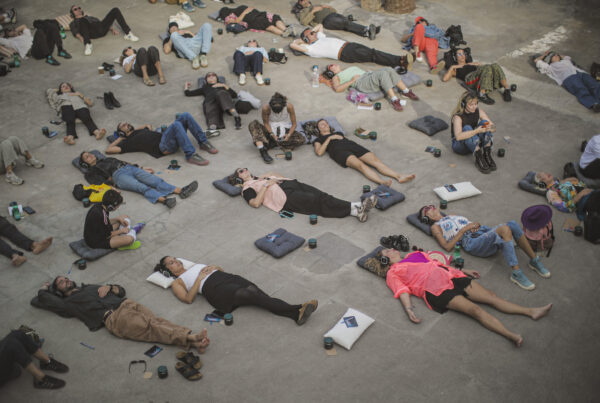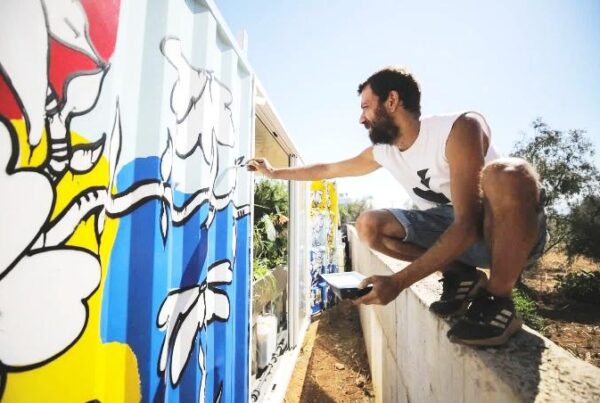

At a time when environmental challenges are forcing us to reconsider our relationship with the natural world, art can offer something that data and discussion alone cannot: a space to pause, observe and feel.
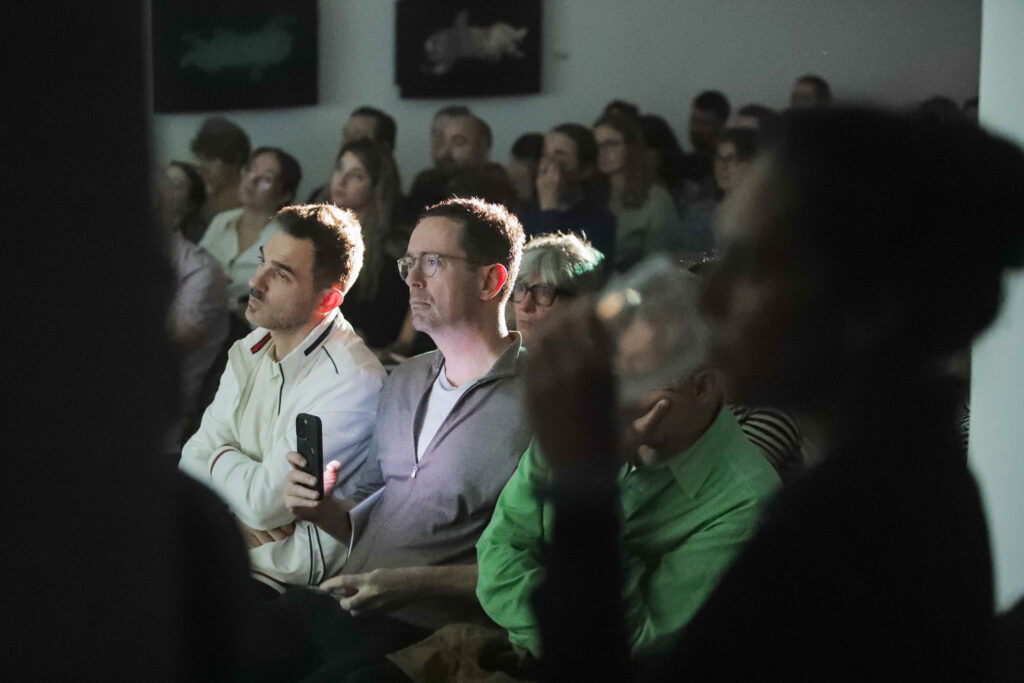
As part of its artistic engagement approach, REMEDIES brought this perspective to Hearth Summit Aegean 2026 through Hikaru: The Fractured Mirror of the Anthropocene, a poetic performance by artist Anastasia Parava.
Organised by Impact Hub Athens from 23 to 25 October 2026 in Santorini, Hearth Summit Aegean brought together artists, researchers, entrepreneurs, environmental practitioners and local communities to explore the intersection of wellbeing, landscape and regeneration. Through discussions, artistic performances, participatory workshops and direct engagement with the island, the Summit encouraged participants to rethink their relationship with nature and imagine more regenerative futures.
REMEDIES contributed to this exploration through artistic performances and the Zero Waste Island Pathway, connecting environmental awareness with practical experiences of waste prevention, circularity and marine protection.
Fourth Artistic Residency: The Fractured Mirror of the Anthropocene
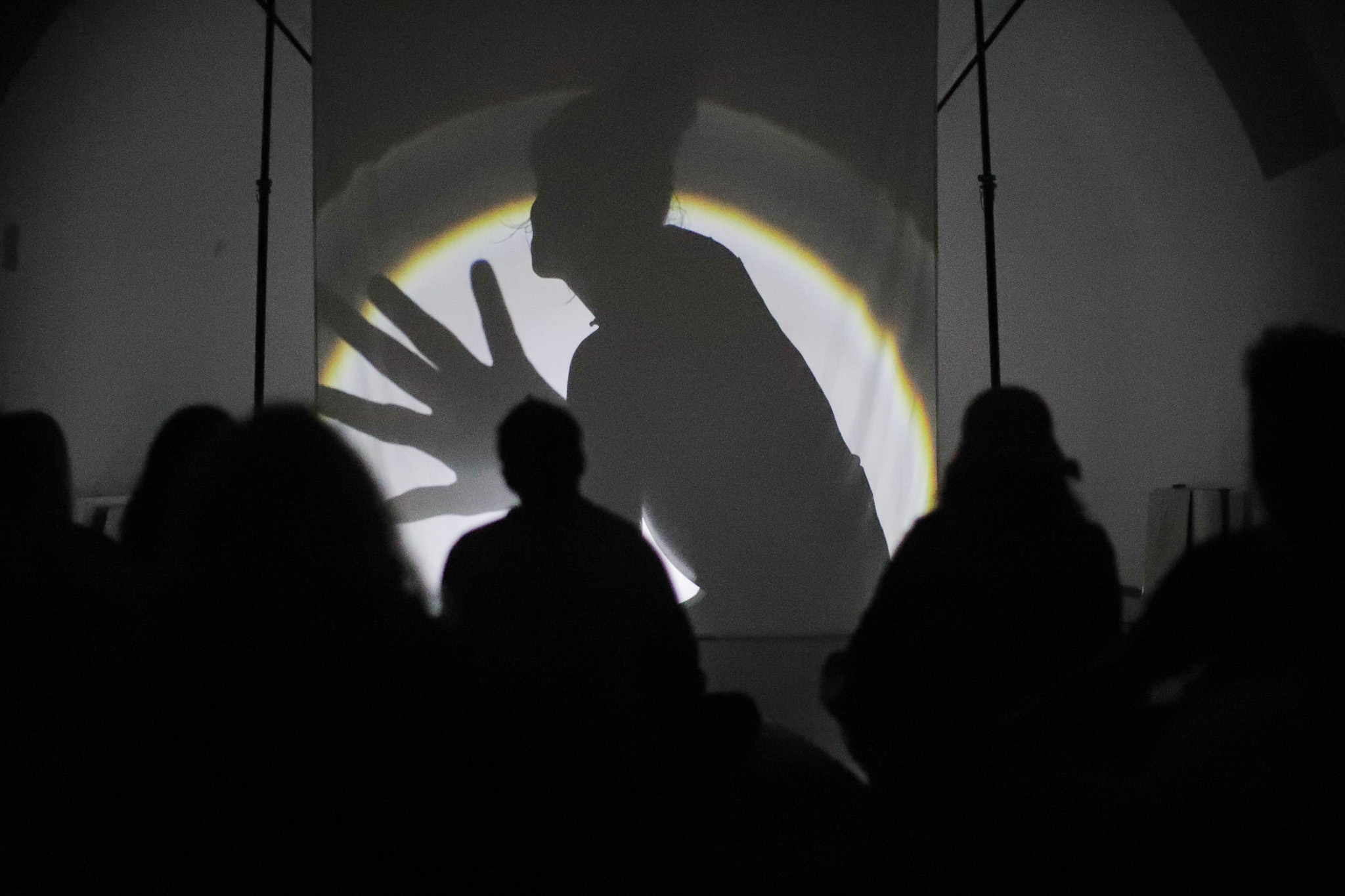
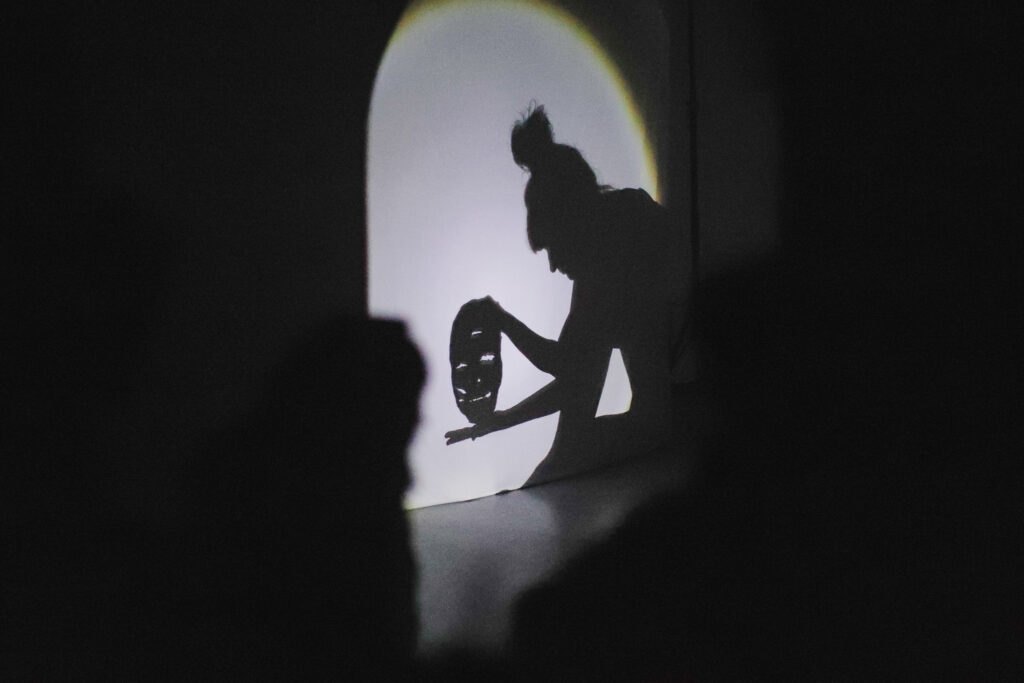
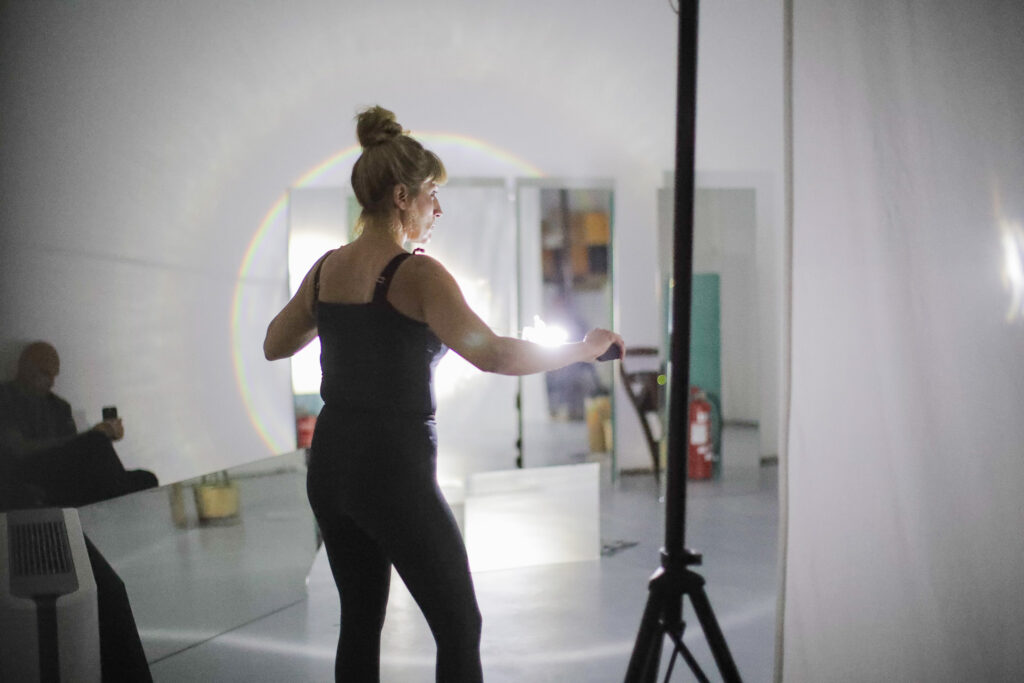
Presented on 23 October at the Mati Art Observatory, Hikaru opened the first evening of the Summit, inviting participants into a world of light, shadow, mirrors, prisms, movement and electroacoustic sound.
The performance approaches the Anthropocene as a fractured mirror: an era in which the consequences of human activity return to us as reflections of the world we have shaped.
Drawing on Carl Jung’s concept of the Shadow, Hikaru explores what remains unseen, both around us and within ourselves. Through an analogue visual language of light, mirrors, objects and the human body, images continuously transform depending on the viewer’s perspective, reminding us that changing how we look at something can fundamentally change how we understand it.
The slow rhythm and electroacoustic soundscapes create space for reflection, inviting the audience to consider the relationship between inner and outer ecology, and how the way we relate to ourselves connects with the way we treat other people, landscapes and the living world.
Connecting Artistic Reflection with Environmental Action
The performance introduced an important dimension to the environmental conversations that followed throughout Hearth Summit Aegean.
While Hikaru invited participants to reconsider their perceptions and relationship with nature, the REMEDIES-supported Zero Waste Island Pathway translated these reflections into practical experiences.
As part of the Summit’s Learning from Place programme on 24 October, participants explored waste prevention and circularity through a beach clean-up at Vlychada, conversations about local environmental challenges and a hands-on workshop combining plastic reuse through the Plastic Lab approach with traditional chaste tree basket weaving.
Together, these experiences connected artistic reflection with tangible environmental practices, highlighting how both creativity and collective action can help transform our relationship with materials, waste and natural ecosystems.
Through its Artistic Residencies initiative, REMEDIES seeks to make environmental challenges more accessible by bringing together science, creativity and community engagement.
At Hearth Summit Aegean, Hikaru demonstrated how art can open new perspectives on ecological responsibility, creating the space for participants to reflect on the changes needed to build healthier relationships with our environment and oceans.