
Innovation snapshop
| Related REMEDIES pillar | Prevention of plastic waste; zero-waste solutions; circular alternatives to single-use plastics. |
| Partner / owner | Tiphaine Guerout, co-fondatrice de KOOVEE |
| Location | Marseille, France |
| Historical | Koovee began development in 2017 and launched its first products in 2020. Since then, the solution has expanded gradually across France and Europe. |
| Made for | Island shops, restaurants, ice cream shops, cold drink bars, visitor-serving businesses, local authorities, protected area managers and organisations seeking practical alternatives to single-use plastic utensils. |
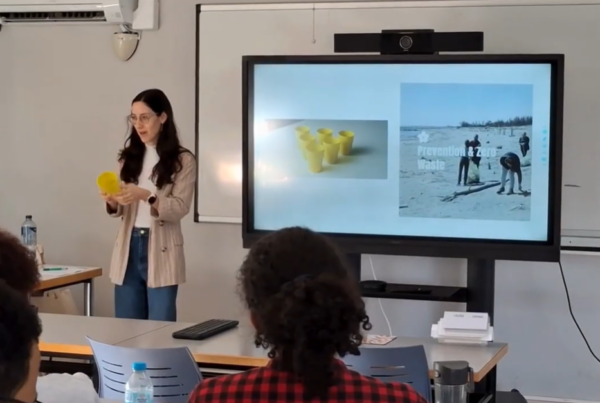
| Technology maturity | A field-tested circular solution implemented on Kerkennah island through the organisation of 8 training sessions in 2025 as part of the “No More Plastic in Kerkennah” project, involving around 50 participants (mostly fishermen’s wives). |
| Commercial relevance | A locally produced, natural and edible alternative to plastic items used in the eating industry and for tourism. Very useful on an island which is very dependent on plastic cutlery and whose economy depends on tourism. |
Challenge adresses
From giant reed object article :
Small islands experience strong seasonal pressure during the summer months, when visitor numbers increase and the consumption of takeaway food, ice cream and cold drinks rises. This leads to higher use of disposable plastic utensils, many of which are used only once before being discarded.
These items often arrive through complex supply chains and can quickly become waste in fragile island environments. In territories such as Mediterranean islands, the lack of practical local alternatives made it necessary to develop a solution adapted to island businesses, protected natural areas and visitor habits. So the edible cutlery developed by KOOVEE is a wonderful solution to answer this challenge :
- Single-use plastic waste: food and ice cream services can generate large quantities of disposable utensils during the tourism season.
- Lack of local alternatives: small island businesses need practical solutions that can be adopted in everyday service settings.
- Pressure on protected island environments: discarded plastic items can end up in nature and coastal ecosystems.
The solution
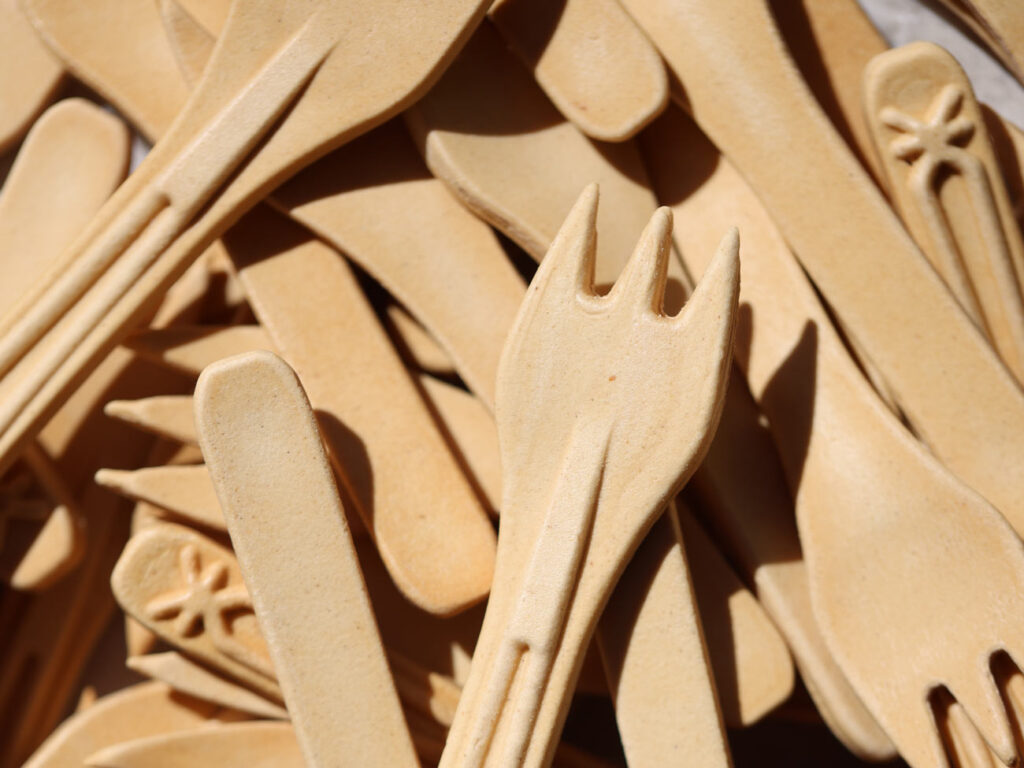
Johanna Maurel and Tiphaine Guerout create KOOVEE : the solution which replaces plastic cutlery with edible ones and allows a significant decrease of plastic waste from the food industry. Koovee has developed a fully local value chain to produce edible, vegan and biodegradable cutlery, as an alternative to single-use plastic or wooden utensils.
The products, spoons, forks and knives, are made from French wheat flour, sourced from the South of France Region, and are produced and packaged locally in their production workshop in Marseille.
The cutlery can be eaten like a biscuit after use or composted if not consumed. They are heat-resistant for over 5 minutes, and contain no plastic, wood or chemical additives. Their entire lifecycle is local and circular, based on nearby agricultural and food-processing sectors.
This solution combines sustainability, innovation and enjoyment, offering a fun and responsible alternative to disposable items.
The approach is rooted in a circular economy model : a natural local material (French floor) is used for the creation of an alternative and local solution to plastic. The product has a sustainable production chain, transformed into useful edible or biodegradable objects and then deployed within the island shops, restaurants, ice cream shop, etc. This reduces significantly the need for imported disposable plastic items and supports a more local, low-waste service model.
Unique Value proposition
Why do we select this solution on the marketplace : Koovee’s edible cutlery tackles several key environmental issues such as :
- Marine and terrestrial pollution from single use plastics.
- High CO2 emissions from the production and transport of plastic or wooden utensils.
- Deforestation, chemical additives, and non-recyclability of so-called “eco” alternatives.
- Lack of truly circular and waste-free solutions in takeaway food services.
Koovee’s approach is to prevent waste generation altogether, rather than managing it post-use. KOOVEE replaces polluting plastic products with biodegradable, locally sourced alternatives. It also creates new economic opportunities.
- Local material valorisation: french floor, colza oil, salt – depends on the recipe for each product (Ingredients from organic farming and without additive)
- Plastic prevention at source: replaces common plastic cutlery before they become waste.
- Natural and reusable design: offers businesses an alternative to polluting plastic objects.
- Biodegradable natural material: uses a locally available natural resource instead of fossil-based plastic.
- Short local lifecycle: production and distribution take place locally, strengthening territorial circularity.
- Support for local know-how: connects ecological design with traditional recipe expertise.
- Island-specific relevance: responds to food industry needs and reduces plastic pressure on small islands (need for practical alternatives in fragile island settings.
Technical and material characteristics
Koovee has developed a unique and proprietary manufacturing process, using only natural ingredients :
- Raw materials :
- French wheat flour
- Plant-based ingredients
- Sugar or Salt
- Vanilla
- Herbs of Provence
➢ No additives | ➢ No plastics
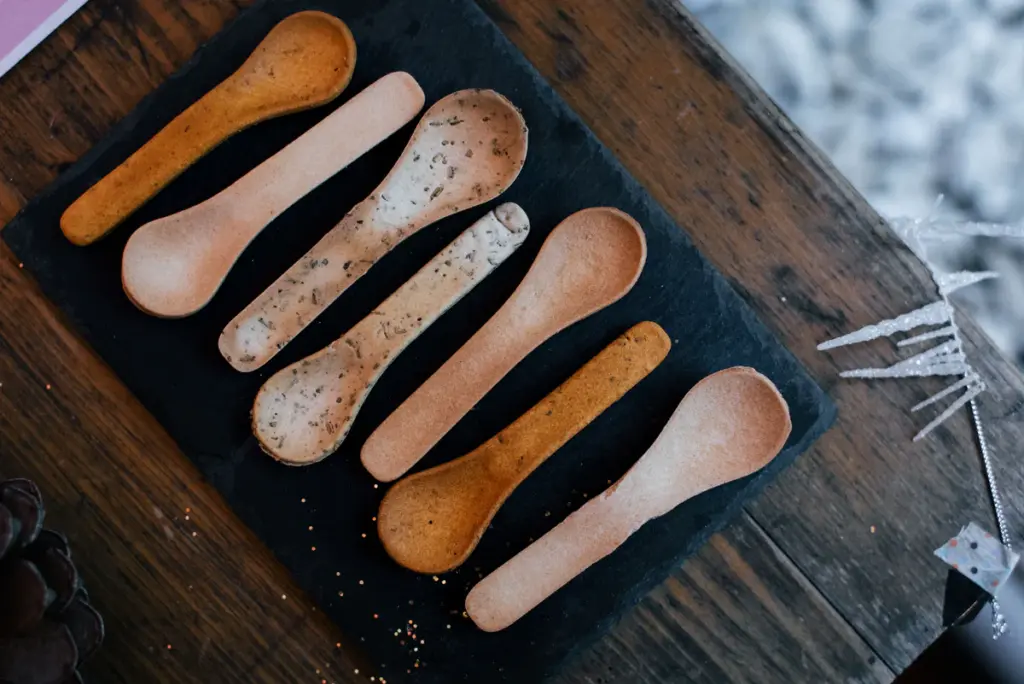
The product range can include :
- spoon
- knife
- fork
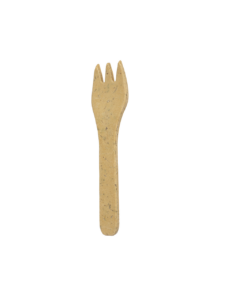
Concerning the design, the production, usage and end of life of the product :
- Design : ergonomic, sturdy and appetising cutlery.
- Production : an industrial baking process ensures food safety and durability.
- Usage : the utensils can be used as regular cutlery and eaten like biscuits.
- End of life : if not consumed, they are fully compostableand biodegradable.
This process ensures minimal carbon footprint and zero waste.
The objects aren’t designed to last overtime but to be eaten or compostable. It’s making them suitable for businesses willing to move away from disposable plastic items. Their value lies not only in the product itself, but also in the local production model, which combines waste prevention, territorial circular economy practice, organic (bio) practices and savoury.
Field implementation
The raw materials are sourced in the South of France Region and processed in Marseille. The products are then distributed across France and other European countries.
The model focused on practical adoption by mostly take away providers such as snacks and ice cream shops but also shopkeepers and restaurant owners depending on the products, showing that plastic prevention can be embedded directly into everyday commercial and industry activity.
The initiative also helped raise awareness among the population, tourists and local businesses by making sustainable alternatives visible at the point of consumption. This kind of project can lead to the restoration of marine and coastal areas which are under threat because of plastic pollution.
We hope that participating and involving island businesses can allow them to adopt these alternatives to plastic objects.
Key results
The initiative has demonstrated that local, natural and edible or biodegradable products can replace plastics in food industry and tourism contexts. It supports the valorisation of BIO products and contributed to the development of a local small industry around natural and savoury alternative products.
The results are several :
- Several thousand edible cutlery items sold across France and Europe.
- the increase of awareness of the environmental benefits of biodegradable products.
- Zero waste, with positive public reception.
- Proven ability to replace plastic and wooden cutlery.
- Engaging and fun user experience, encouraging behaviour change.
- Reduced carbon footprint, waste and deforestation.
Who can use it
- Snacks and ice cream shops : replacing plastic cutlery by edible ones
- Island shops and restaurants : sale or use of KOOVEE cutlery
- Municipalities and local authorities: practical tools for local plastic reduction strategies.
- Protected area managers: visitor-facing solutions for reducing waste in sensitive ecosystems.
- Tourism and hospitality actors: visible alternatives aligned with responsible tourism.
- Circular economy initiatives: a replicable example of local natural product and waste prevention.
- Environmental organisations: a concrete demonstration of behaviour change through product substitution.
Deployment and exploitation pathway
The deployment pathway is based on local production, business adoption and population-facing awareness. The model can be replicated in territories where natural material streams, local craftsmanship and pressure from disposable plastics intersect.
- Local material sourcing: identify available natural or biodegradable material streams.
- Eco-design and production: transform local natural ingredients into practical edible products.
- Business engagement: work with shopkeepers and local food industry that use equivalent plastic items.
- Distribution and adoption: introduce the objects in everyday service settings.
- Awareness and behaviour change: make the alternative visible to customers and visitors.
The aim is to scale up edible cutlery production and distribution and to continue expanding into new sectors and markets. Developing this solution could also help position some islands as pilot territory for plastic reduction, preservation of environment and depollution.
Main challenges
Main challenges are :
- Cost : higher than plastic, but competitive with wooden cutlery.
- Competition from readily available plastic products
- Cultural shift : normalising the idea of eating or composting single use utensils.
- Growing demand : requiring increased production capacity while preserving quality
The main challenge still remains adoption by businesses, as edible natural products can involve a higher upfront cost than disposable alternatives (in plastic). This can discourage some snacks or shopkeepers unless the economic and ecological benefits are clearly communicated. No specific pricing information is included here, in order to keep the marketplace article generic and suitable for public-facing communication.
Additional awareness and engagement are also needed to involve more people and strengthen understanding of the long-term value of this approach. This kind of project could also help to support small local businesses, this could clearly help to adopt by encouraging the producers.
Marketplace positioning
Edible cutlery are positioned as a locally rooted circular solution for preventing plastic waste in islands threatened by tourism and the food industry generated.
The solution is especially relevant for territories where the food industry is important, plastic widely spread and where local alternatives are needed.
Its marketplace value comes from the combination of natural ingredients use, local production, 0-waste aspect, biodegradability and know-how. It is not only a product substitution, but a circular model that turns a local by-product into a practical tool for plastic prevention.
Discover more and contact
Contact : Tiphaine Guerout
E-mail : to be found
LinkedIn : https://www.linkedin.com/in/tiphaineguerout/
Website : https://koovee.co/