

The Sinis Peninsula Demo Site in Sardinia, Italy focuses on Detection and Monitoring, Collection and Valorisation, and Prevention and Zero Waste, with particular attention to beach litter, microplastics, abandoned fishing gear, and underwater plastic pollution. Located in the central-western part of Sardinia, the Sinis Peninsula is both a natural and archaeological tourist destination, with beaches, coastal ecosystems, a small-scale fishing fleet, and both industrial and tourist port activity in the Gulf of Oristano. The site works with National Research Council of Italy (CNR), local NGOs, the Sinis Marine Protected Area, and local fishermen groups to restore underwater wildlife and reduce plastic pollution from tourist and fishing activities.
Watch a visual introduction of the site:
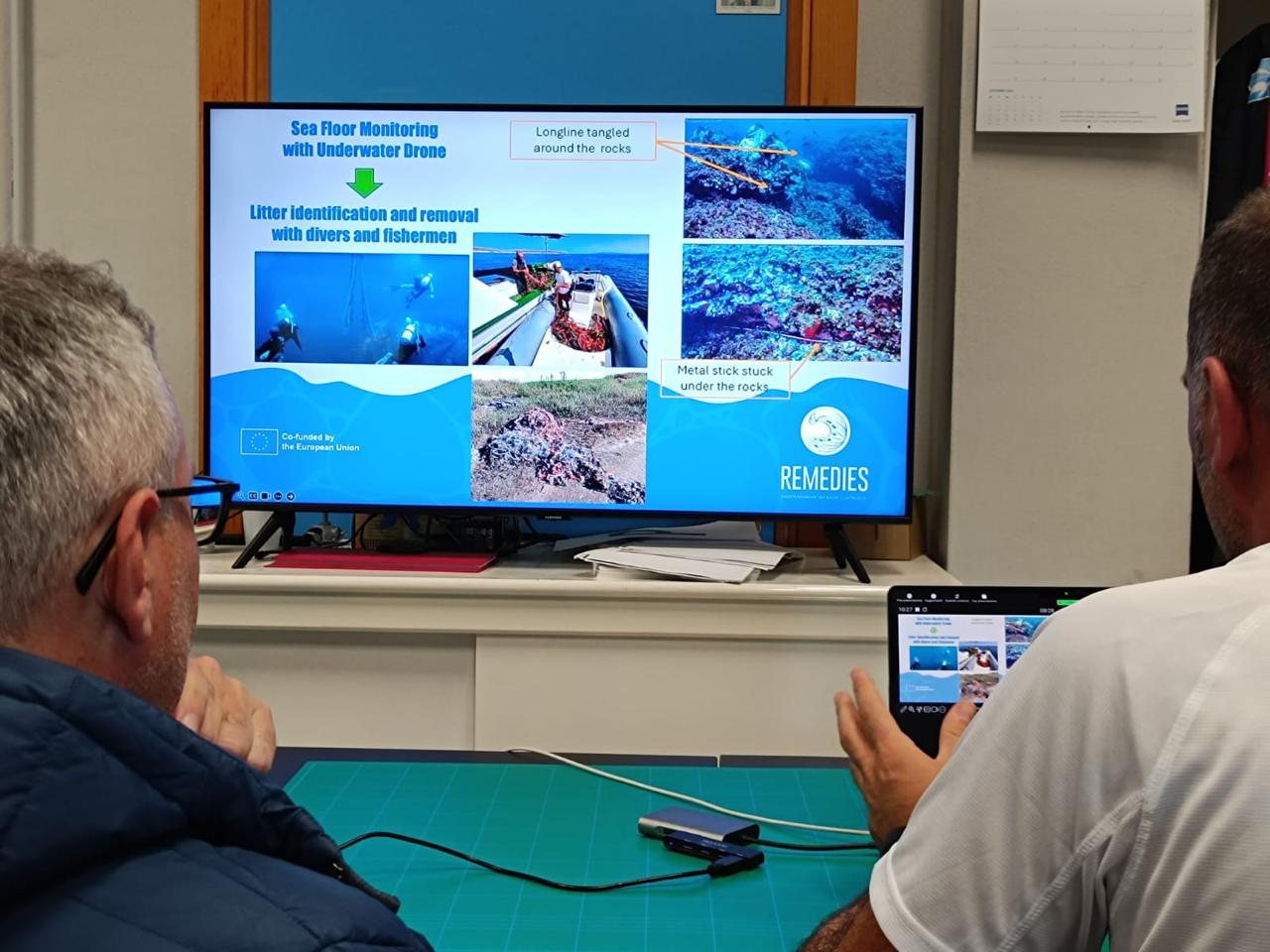
The Sardinia Demo Site responds to a clear local challenge: marine plastic pollution is one of the most critical environmental issues in the area, with plastics washing onto the shore and abandoned fishing nets affecting marine ecosystems. Through REMEDIES, the site combines an underwater drone equipped with a camera and microplastic sampling unit, beach clean-ups, dredging and diving to collect plastic litter, testing of fishing gear made with biodegradable polymers with fishermen, laboratory tests on microplastics including microplastic isolation and i identification of their chemical composition and direct cooperation with the Sinis Marine Protected Area and trade associations. The planned outputs include more than eight campaigns for seabed and shoreline monitoring, 200 kg of plastic waste collected, more than 100 citizens involved, engagement with more than three retailers for zero-waste products, and prevention of 2 tonnes of plastic waste. Over the longer term, the project estimates that clean-ups could be replicated at least 300 more times in Sardinia, while wider deployment of fishing gear and zero-waste packaging could help collect 60 tonnes of plastic litter and prevent around 290 tonnes of conventional plastics.
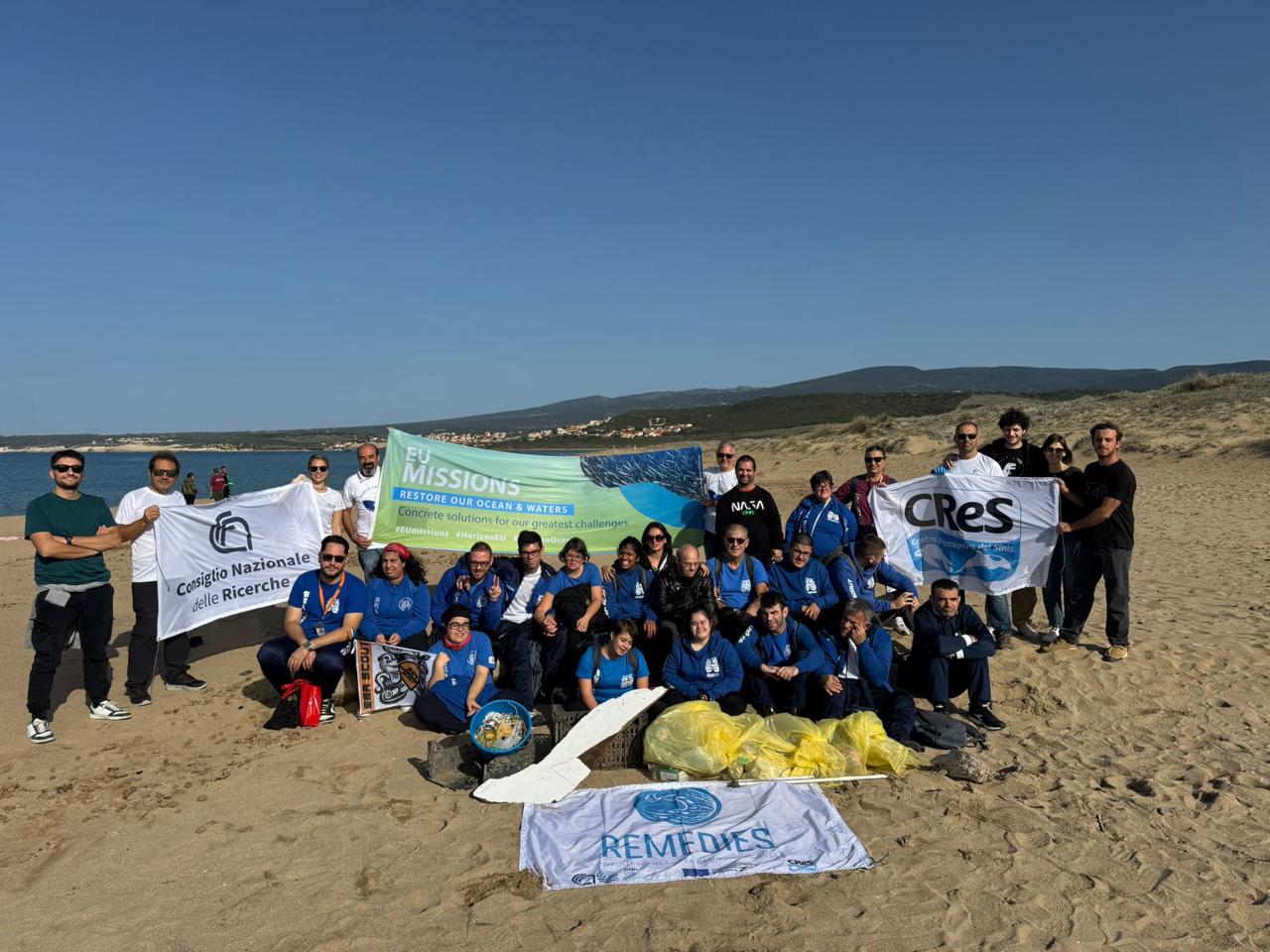
The first Sardinian clean-up action took place on 1 August 2023, when National Research Council of Italy (CNR) organised a beach and sea-bottom clean-up in the Sinis Peninsula with CReS, Centro di Recupero del Sinis. A team of 56 people worked across more than 700 metres of beach, while 21 snorkelers carried out the seabed clean-up. Together, the teams removed beach and underwater litter, including plastic bags, wrapping, and plastic cups, leaving the beach almost free of macro and mega litter and strengthening environmental awareness among participants.
In November 2024, Sardinia hosted the 2nd PLASTIC FANTASTIC Webinar, Sardinia Edition, organised by REMEDIES with National Research Council of Italy (CNR), Venice Lagoon Plastic Free (VLPF), the University of Maribor (UM), and Impact Hub Athens (IHA). The hybrid seminar took place on 26 November 2024 at CNR-IAS Torregrande and online, followed by field activities at Spiaggia Is Arenas. The session focused on plastic identification and management, giving participants practical knowledge on plastic types, microplastics, recyclability, conscious consumption, and data-driven clean-up practices tailored to Sardinia’s local challenges. The same action continued with a beach clean-up and monitoring session at Spiaggia Is Arenas, where participants applied the knowledge from the seminar by identifying and categorising plastic waste, removing harmful plastics, and supporting the restoration of the beach.
Sardinia is also one of the REMEDIES sites connected to the development and testing of fishing nets made with biodegradable polymers, a key Prevention and Zero-Waste innovation developed by Cittadini and Next Technology Tecnotessile, with the involvement of National Research Council of Italy (CNR), Bio-Mi, AITIIP, and the University of Maribor (UM). The technology explores alternatives to conventional nylon or polyethylene nets, which can persist for decades in marine environments and contribute to ghost fishing and microplastic contamination. The nets are manufactured using certified biodegradable polymers under industrial composting conditions. They are designed to maintain adequate performance during use, while the constituent polymers are certified to biodegrade under controlled industrial composting conditions. This approach supports circular waste management, responsible disposal, and emerging sustainability regulations. The technology is also presented in the REMEDIES Innovation Marketplace as a practical solution for fisheries, the boating industry, environmental organisations, and policymakers, with more detail available in the related technology video.
From September 2025, the Sardinian work became part of the broader REMEDIES Anti-Litter Campaign in Italy, led by National Research Council of Italy (CNR) in collaboration with Sea Scout Group NGO across Sardinia and Southern Italy. The campaign connects scientific excellence, citizen engagement, youth mobilisation, institutional cooperation, and innovative technologies to reduce plastic waste, empower communities, and promote circular solutions for Mediterranean ecosystems. It supports REMEDIES’ wider objectives by detecting and monitoring marine litter, mobilising citizens and institutions, promoting scalable zero-waste solutions, raising awareness through education and outreach, and creating bridges between researchers, policymakers, and civil society.
From 6 to 9 October 2025, Oristano, Sardinia hosted the REMEDIES 4-day event in Sardinia, bringing together the 7th REMEDIES General Assembly, technical exchanges, field visits, and hands-on environmental action. Organised by CNR-IAS and CNR-IPCB, the event gathered project partners, researchers, policymakers, and civil society representatives to review progress across Work Packages, discuss regional action plans for the Demo Sites, and focus on innovative materials and community-led interventions in the Sardinian pilot. As part of the programme, the 6th REMEDIES Cluster Meeting, “Protected areas and citizens against plastic pollution” took place on 6 October 2025 at in Oristano, exploring the role of Marine Protected Areas as observatories for litter pollution, citizen science through BlueMissionMed, future funding opportunities through TASC-RestoreMed, the interaction between marine litter and biota, the Sardinian Regional Network for the Conservation of Marine Fauna, the role of the Sinis Marine Protected Area, and the collaboration between Sea Scout, National Research Council of Italy (CNR), and CReS. The wider four-day programme included field visits to the Cabras Museum, Peschiera Pontis fishery, Is Arutas Beach in the Sinis Marine Protected Area, and the Sea Turtle Rescue Center at San Giovanni di Sinis, concluding with a seafloor clean-up through snorkelling. The Cluster Meeting recording is available through the 6th REMEDIES Cluster Meeting video.
The Sardinian campaign also connected to the international scientific debate on microplastics through the 4th International Conference on Microplastic Pollution in the Mediterranean Sea, µMED, led by National Research Council of Italy (CNR) in Ischia, Naples, from 19 to 22 October 2025. The conference gathered 128 participants from 21 countries and addressed micro- and nanoplastic analysis and detection, environmental fate, ecosystem and health impacts, and solutions and policies. REMEDIES-related contributions included work on micro and nanoplastics in daily life and biodegradable polymer blends with lignin as UV stabilisers for eco-sustainable fishing nets, linking Sardinia’s Demo Site activities with wider Mediterranean research and policy exchange.
Together, the Sardinia Demo Site updates show how the Sinis Peninsula is advancing the REMEDIES mission through a combination of scientific monitoring, coastal and seabed clean-ups, citizen engagement, Marine Protected Area cooperation, biodegradable fishing gear, and knowledge exchange across research, policy, and local communities. By connecting fishermen, protected-area managers, researchers, NGOs, volunteers, retailers, and European partners, Sardinia demonstrates how local action can support healthier marine ecosystems, address ghost fishing risks and microplastic pollution associated with abandoned fishing gear, and build more sustainable coastal practices in the Mediterranean.