
Innovation snapshot
The development and production of fishing nets made with biodegradable polymers offers a sustainable alternative to traditional nets. It uses advanced biodegradable polymer compounds and a production pathway based on melt spinning for yarn production, followed by twisting, weaving, thermo-fixing and confection of the net.
Related REMEDIES pillar: Prevention & Zero-Waste Solutions
Partner(s)/Owner(s): Cittadini, Next Technology Tecnotessile
Other Partners Involved: National Research Council of Italy, Bio-Mi, AITIIP, University of Maribor
Made for: Fisheries, boating industry, environmental organisations, regulatory bodies, and actors seeking sustainable fishing gear
Technology maturity: TRL7 demonstrator, with monofilament fishing net and braided rope produced for field testing
Commercial relevance: Fishing gears have been developed using biodegradable polymers designed also for industrial compostability. This approach has the potential to reduce reliance on conventional fossil-based plastics and to support circular end-of-life management pathways
Demonstration sites: Sinis Peninsula, Sardinia and Cyclades area
Watch more about the Fishing Nets being tested in Sardinia here (link to be added soon)
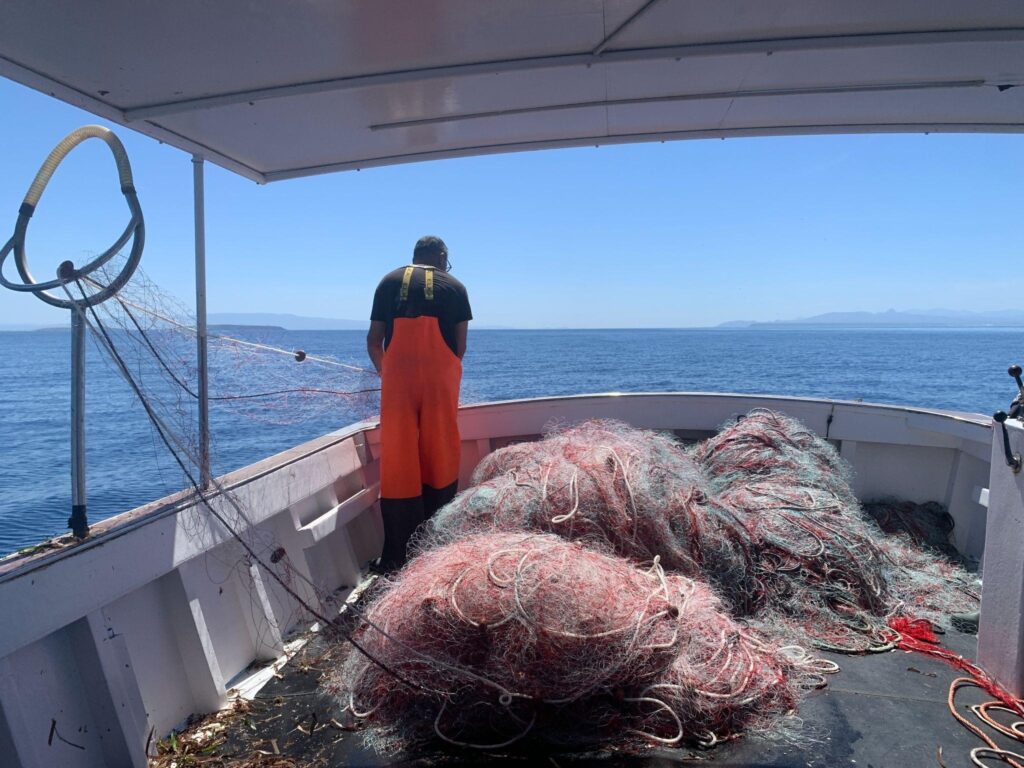 Fishing net testing in real fishing conditions, Sinis Peninsula
The challenge it addresses
Traditional nets, made from synthetic polymers, persist in marine environments for decades, contributing to pollution and ghost fishing. Lost or abandoned synthetic fishing nets can trap marine life and break down into harmful microplastics that enter the food chain.
This technology addresses the prevention of plastic waste from non-degradable fishing gear. It is designed to provide adequate fishing performance while offering additional end-of-life management options compared to conventional polymers , so that end-of-life nets do not become long-term pollutants or microplastic sources.
The solution
Fishing nets made with biodegradable polymers provide an innovative approach to waste prevention and valorisation. The solution is based on yarns made of biodegradable polymers, produced through a structured material development and industrial scale-up process.
The REMEDIES demonstrator includes a knotted monofilament fishing net and a monofilament braided rope. The selected industrial-scale compound, also referred to as C 2.2, which was used to produce the monofilament yarn for the fishing gear demonstrator.
Unique value proposition
- Sustainable End-of-Life Management: unlike conventional synthetic nets, these nets are produced using biodegradable materials designed also for industrial compostability, with the great potential of preventing plastic waste accumulation.
- High-Performance Design: the nets are crafted using advanced biodegradable polymer formulations.
- Adaptability: modular production allows customization based on fishing industry needs, offering different mesh sizes, thicknesses and strength levels.
- Alignment with Environmental Regulations: the solution aligns with emerging regulatory frameworks pushing for sustainable fishing gear.
- Circular Economy Integration: the potential transformation of discarded nets into compost promotes sustainability and contributes to zero-waste goals.
Technical characteristics
- Material Composition: advanced biodegradable polymer compounds.
- Production Process: melt spinning for yarn production, followed by twisting, weaving, thermo-fixing and confection of the net.
- Fishing net demonstrator: knotted monofilament net, diameter 0.33 mm, 41.6 mm half mesh, double knot, 50 mesh depth and 1825 mesh length.
- Braided rope demonstrator: 7 mm diameter, 12 carriers braided construction, without core.
- Capacity: up to several tons depending on count of yarn and biodegradable polymer availability.
- Customization: various mesh sizes, yarn diameters and knot types.
- Quality Control: compliance with international standards through rigorous testing.
Material development and scale-up
The development pathway evaluated several bio-based and biodegradable polymers, including PLA, PBS, PBAT, PCL, PHBV and starch-based blends. Additives such as talc, cellulose nanowhiskers and lignin were tested to improve UV stability and mechanical properties.
Following laboratory trials, Compound C 2.2 was selected for industrial spinning scale-up. The target was to replicate the C 2.2_03 filament with extrusion temperatures between 125 and 135 °C, filament diameter below 350 μm, linear density of 1635 dtex or lower, and tenacity of 2.37 cN/dtex or higher.
The industrial scale-up showed that the material remained stable during extrusion, while stretching required optimization. Condition Set V2-6 gave the better performance, with a stable process, a total draw ratio above 4, diameter monitoring at 340 ± 3 μm, and a reported tenacity of 2.42 cN/dtex during production testing.
Fishing gear production and quality control
Cittadini produced the fishing gear demonstrators using the available monofilament yarn. The net production followed the standard industrial sequence: yarn preparation, weaving, quality control, stretching and thermofixing, confectioning and packaging.
For the monofilament fishing net, Cittadini used a loom equipped with ceramic eyelets and a pitch suitable for weaving monofilament nets with a 0.33 mm diameter and a double knot structure. The limited quantity of the monofilament required a manual workaround during spool preparation, but the production was completed successfully with almost no waste of raw material.
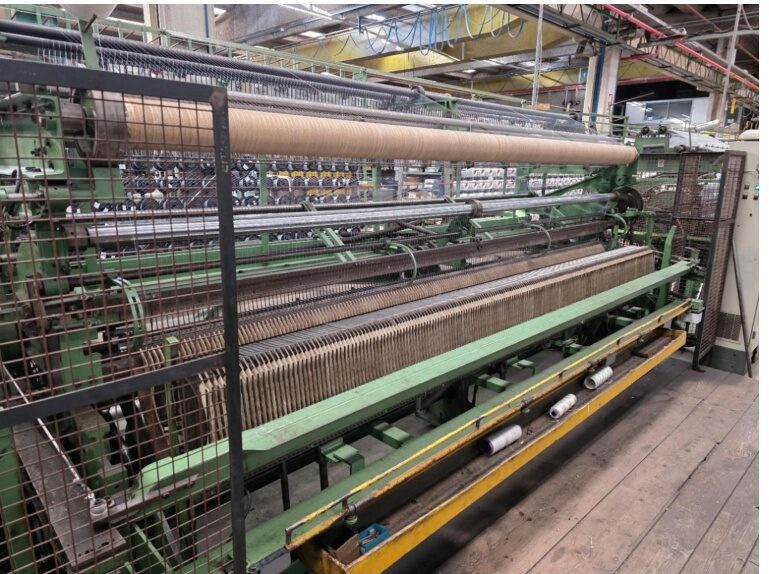 CIT Fishing Net Loom
After weaving, operators inspected every section of the opened net. If a hole was detected, it was repaired manually using the same yarn as the original net. The net was then stretched and heat-set to stabilise the knots, prevent unraveling and improve resistance to wear and deformation.
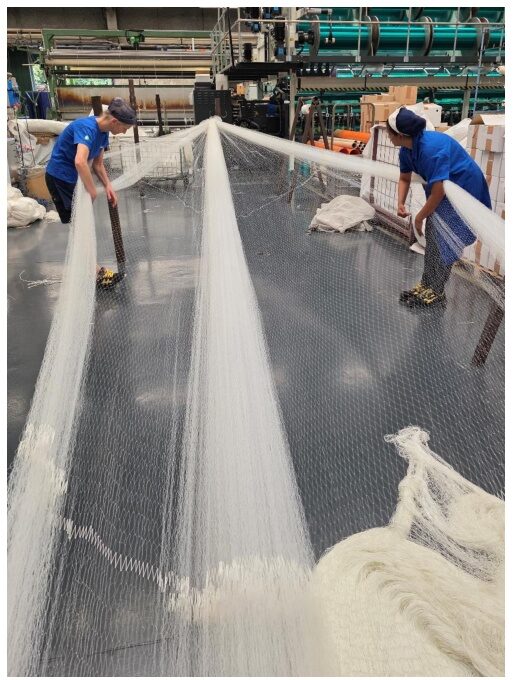 Quality control and mending of the opened net
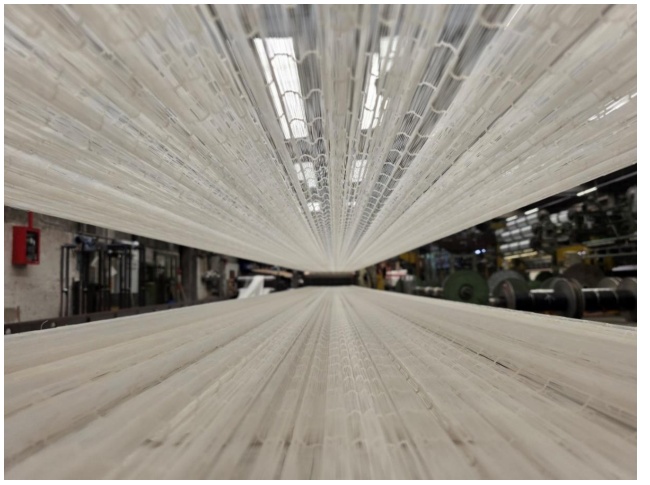 Net stretched on the carrier before heat-setting
The net was finally cut and packaged in small bales. The internal Laboratory of Cittadini tested the final net using the standard norm ISO 1806 to control the mesh breaking load. The reported breaking load was 4.73 kgf and elongation at break was 36.88%.
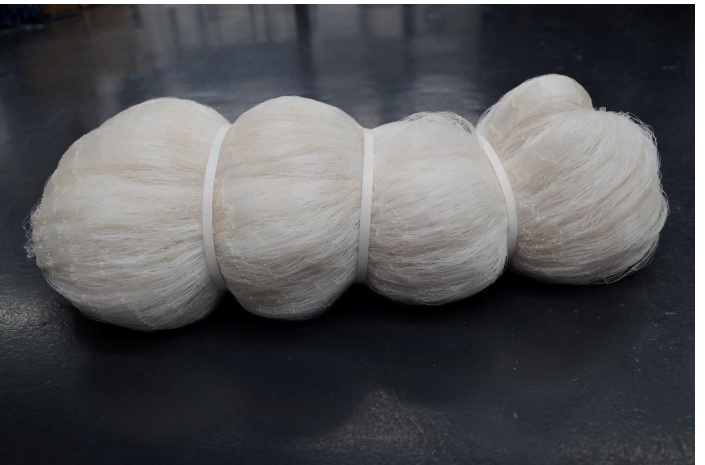 Final appearance of the bale of bio-degradable monofilament net
Sinis Peninsula field testing
The fishing net and braided rope demonstrators will be tested by professional fishermen in two demo sites: the Sinis Peninsula, Sardinia and the Cyclades area. The objective is to observe how the gear behaves in real life conditions and to receive feedback on handling, applicability and comparison with standard fossil-based fishing gears.
In the Sinis Peninsula, testing is carried out within the Sinis Peninsula – Mal di Ventre Island Marine Protected Area. The experimental nets are used in real fishing conditions to evaluate durability and material ageing over time under operational marine exposure conditions, behaviour at sea, and catch efficiency compared to conventional nets.
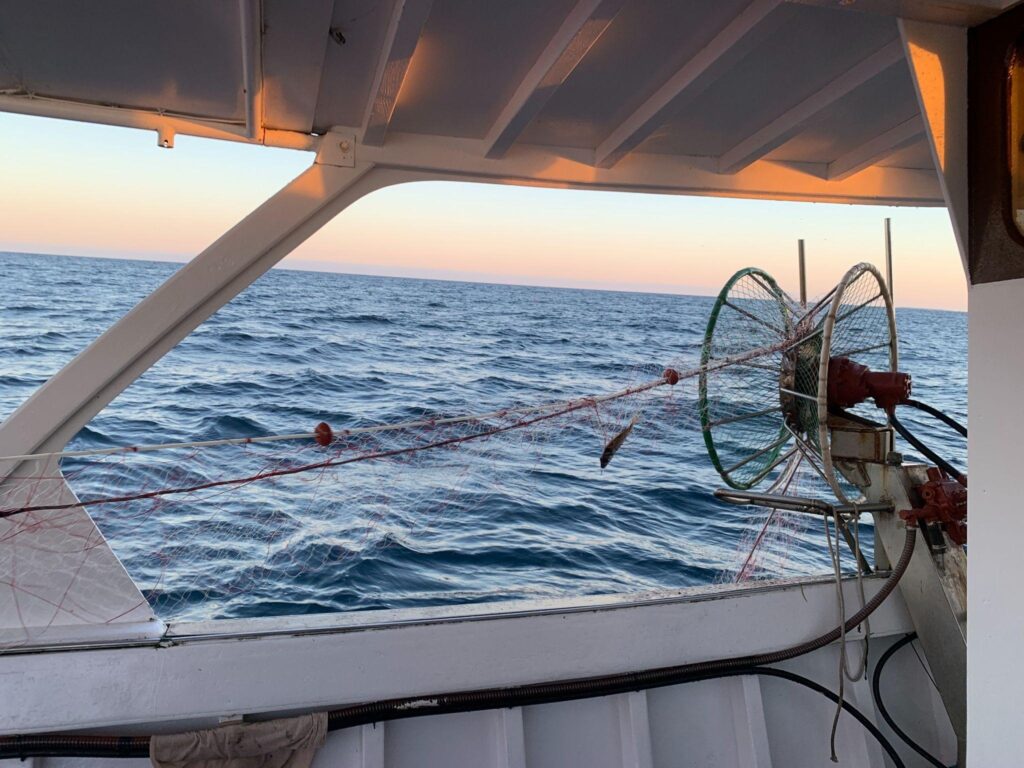 Testing of fishing nets made with biodegradable polymers onboard in the Sinis Peninsula
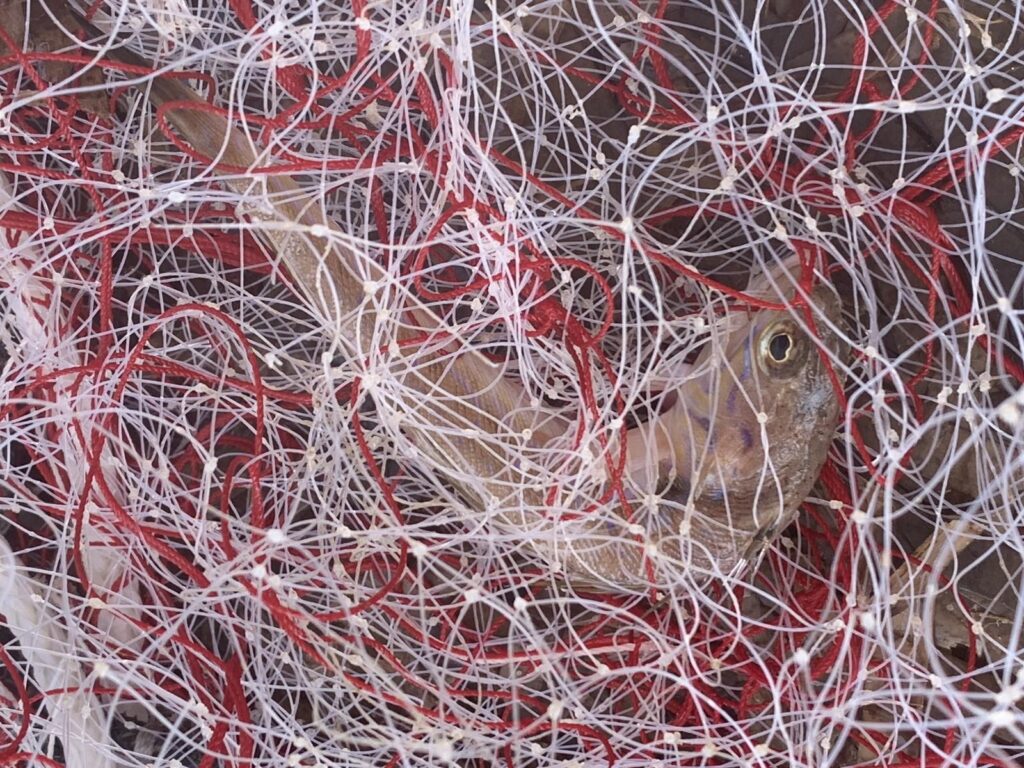 Net performance observed during testing in real fishing conditions
Who can use it
- Fisheries: sustainable gear to minimize environmental impact and support compliance with stricter regulations.
- Boating industry: eco-friendly solutions to reduce marine litter linked to fishing and marine operations.
- Environmental organisations: a practical technology to promote ocean health initiatives and responsible disposal practices.
- Regulatory bodies and policymakers: a demonstrator that can inform policies supporting sustainable fishing gear.
- Funders and investors: a TRL7 solution with a clear pathway for further optimization, pilots and market expansion.
Deployment and exploitation pathway
The exploitation pathway combines R&D projects, industry collaboration, market expansion and awareness campaigns. Further R&D can improve material formulations and expand applications. Industry collaboration can support integration with fisheries and regulatory bodies. Market expansion can offer customized solutions to diverse market segments.
The immediate next step is real-world testing in Sardinia and the Cyclades area. These tests assess handling, durability and catch efficiency. NTT will also do UV tests on the demonstrators produced to verify the aging of the material exposed to UV.
Discover more and contact
- Cittadini: https://www.cittadini.eu
- Next Technology Tecnotessile: https://www.tecnotex.it
- Contact for further information: info@remedies.com