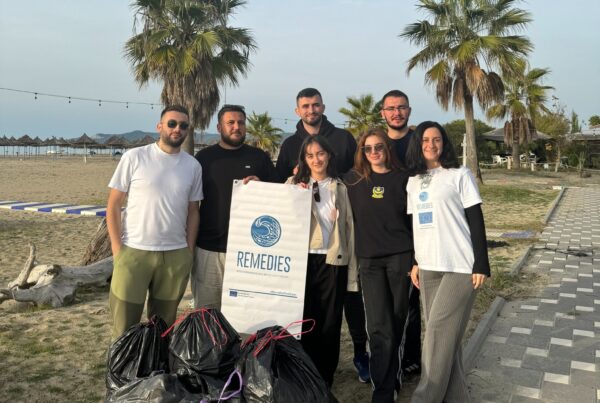

The Zero-Waste Seaweed Coatings for Cosmetics technology applies a seaweed-based biopolymer coating around cosmetic products such as shampoo, shower gel or soap. The result is a single-use cosmetic ball that protects the product, dissolves when used with water and removes the need for a plastic container.
Innovation snapshot
Related REMEDIES pillar: Prevention & Zero-Waste
Partner(s)/Owner(s): National Institute of Chemistry
Made for: Cosmetics manufacturers, hospitality providers, hotels, wellness centres and resorts, eco-conscious consumers, zero-waste and plastic-free shops, sports and fitness facilities, festivals, tourism operators and policymakers.
Technology maturity: Developed under REMEDIES to advance from TRL 5 to TRL 7 by the end of the project in 2026; D3.3 also reports TRL 7+ and SRL 7+ as part of the market exploitation phase.
Commercial relevance: Designed for buyers that need a visible, practical and scalable alternative to small single-use plastic cosmetic packaging, especially in high-turnover contexts such as hospitality, travel, fitness and tourism, while supporting sustainability positioning and brand differentiation.
Watch the Zero-Waste Technology Presentation:
The challenge addressed
Cosmetics and personal care products still rely heavily on small plastic formats. This is especially visible in hotels, resorts, gyms, sports facilities, festivals, travel kits and other high-consumption settings where single-use bottles or sachets are convenient but generate avoidable packaging waste.
- Regulatory pressure: packaging reduction, reuse and plastic prevention are becoming stronger priorities for public authorities and industry buyers.
- Brand pressure: customers increasingly expect sustainable options that are visible, credible and easy to understand.
- Operational pressure: many buyers need alternatives that can work with existing product categories without redesigning their full business model.
- Consumer behaviour: sustainable formats must be simple, attractive and usable in real settings, not only in communication campaigns.
The solution
The technology offers a novel seaweed-based coating that encapsulates a cosmetic product in a plastic-free format. It is designed to replace the container itself, not only to reduce or redesign the outer packaging. The coating is described by REMEDIES as natural, renewable, water-soluble and biodegradable, and the marketplace page positions it as a way to eliminate single-use cosmetic bottles at source.
For brands and buyers, this means a compact format that can be used as a single-use shampoo, shower gel, soap or similar cosmetic product. For hotels, resorts and tourism operators, it offers a distinctive guest-facing sustainability solution. For cosmetic brands and manufacturers, it creates a new product line around zero-waste, travel-friendly and plastic-free cosmetics.
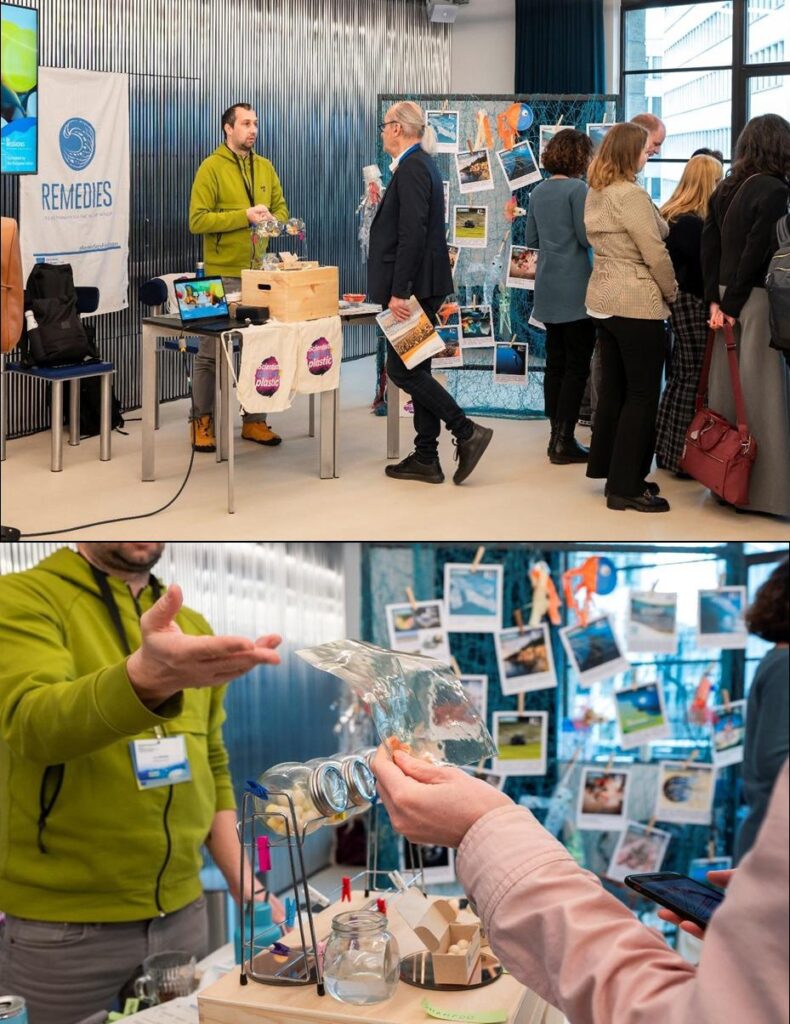 Promotion of zero-waste shampoo balls and showcasing the seaweed biomaterial at EU Ocean Days
Unique value proposition
- Container-free cosmetic format: the product itself is held in a seaweed-based coating, reducing the need for primary plastic packaging.
- Flexible technology platform: the seaweed-based coating can be adapted to different cosmetic formulations, fragrances, colours and application requirements, enabling the development of a wide range of cosmetic products.
- Plug-and-play direction: the technology is designed to integrate with soaps, shampoos and shower gels, supporting adoption by cosmetics manufacturers and packaging partners.
- Relevant for high-waste buyer contexts: well suited for hospitality, travel, sports and fitness, festivals, campsites and tourism locations where small plastic packaging is common.
- Scalable production target: the REMEDIES innovation profile reports capacity of up to 500,000 single-use shampoo balls per year with zero-waste coatings.
- Consumer-facing impact: the product is visible, tactile and easy to explain, which makes it useful for brands that want sustainability to be experienced, not hidden in the supply chain.
- Engagement-ready: the format can also support workshops, demonstrations and citizen science activities, helping buyers turn product adoption into awareness and behaviour-change activities.
Buyer use cases
- Hotels, resorts and hospitality groups: replace small shampoo, shower gel or soap bottles with a plastic-free guest amenity that is easy to communicate.
- Cosmetics manufacturers: develop a zero-waste product line using seaweed coating around existing or adapted formulations.
- Tourism destinations and eco-resorts: produce or showcase zero-waste cosmetic balls directly at touristic locations, where the REMEDIES marketplace identifies strong relevance.
- Sports, fitness and wellness facilities: offer single-use hygiene products without adding plastic sachets or bottles to daily operations.
- Zero-waste shops and concept stores: add a distinctive, educational, plastic-free cosmetic format to product portfolios.
- Festivals and public events: use the product as a demonstration, giveaway or workshop format linked to plastic prevention and circular economy campaigns.
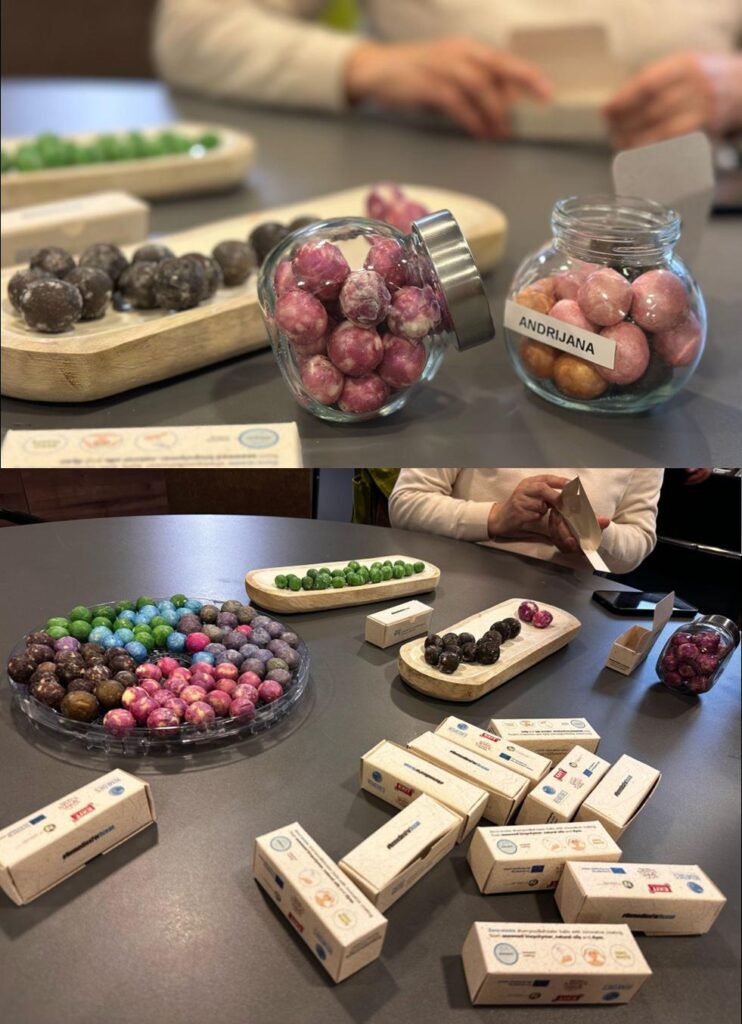 Finished shampoo balls and secondary packaging options for transport and home use
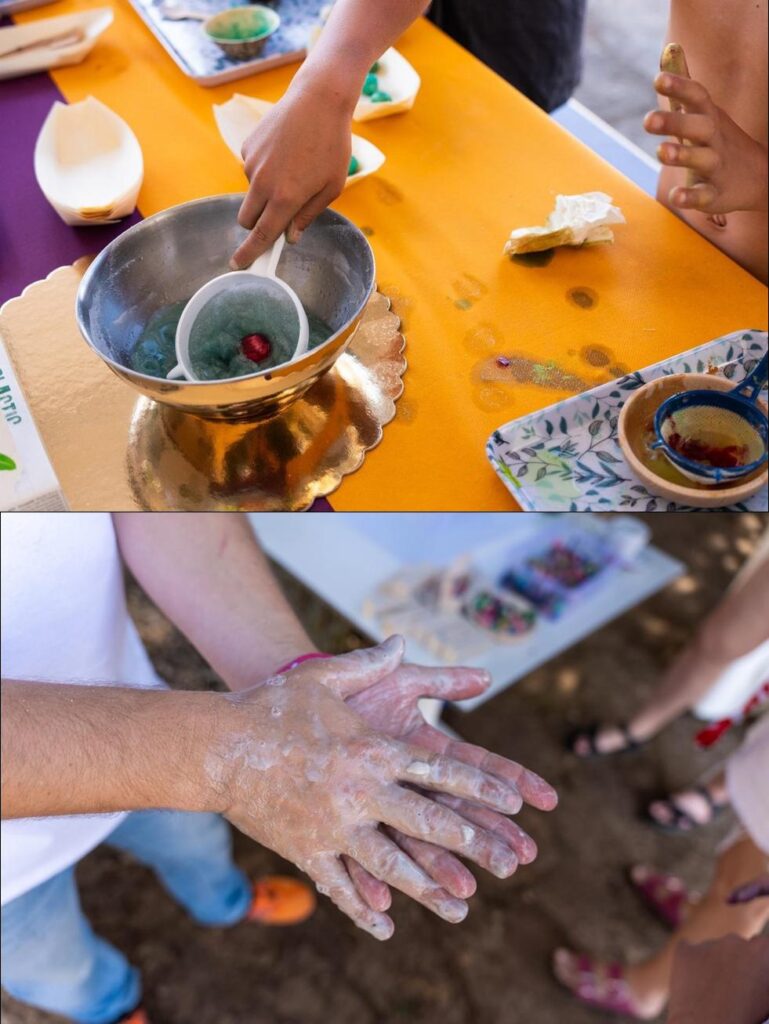 Applying the seaweed coating and testing the product on site
Business and exploitation pathway
The marketplace route should focus on licensing, product partnerships, direct product deployment and demonstration-based sales. The strongest buyer proposition is not only that the product is sustainable, but that it is commercially visible, easy to explain and adaptable to different buyer contexts.
- Licensing, technology transfer and commercial partnerships: NIC holds the core know-how and can collaborate with cosmetic manufacturers, packaging companies and other industrial partners through licensing, technology transfer, co-development or other suitable commercialisation pathways.
- Hospitality and tourism partnerships: hotels, wellness centres, resorts, campsites and high-tourism destinations can pilot and adopt the format to replace small plastic amenities and strengthen sustainability positioning.
- Workshops and activation formats: buyers can combine the product with public engagement, employee engagement and corporate sustainability programmes, brand activation, zero-waste education or citizen science events.
- Retail and zero-waste channels: the product can be positioned through zero-waste shops, concept stores, eco-tourism shops and sustainability-focused retail environments.
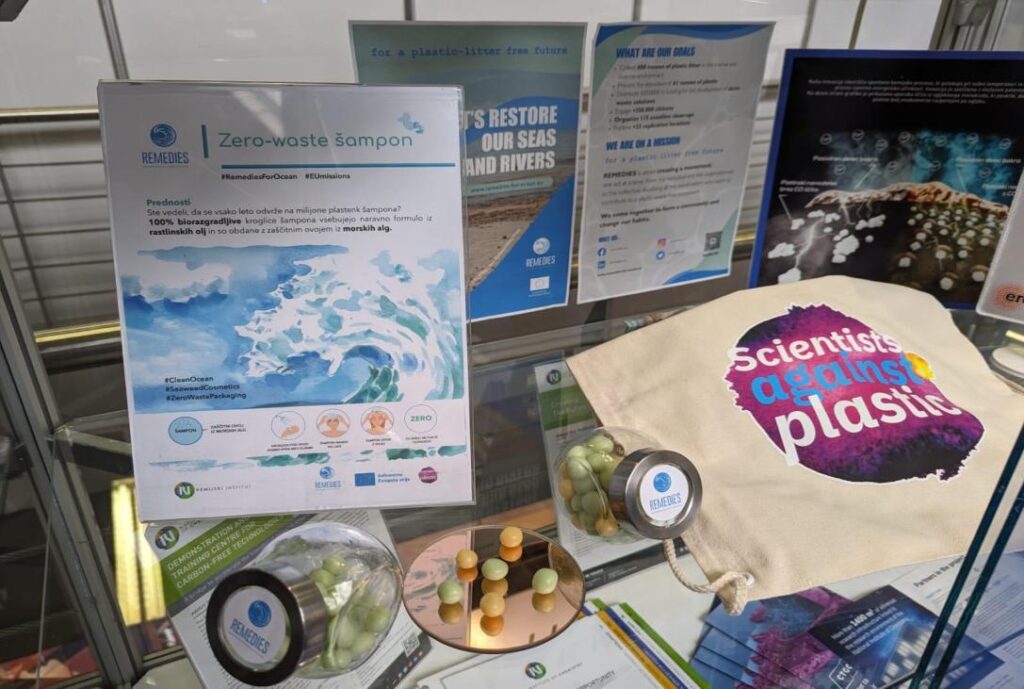 Product display and communication material for the zero-waste cosmetics solution
Technical characteristics
- Material base: seaweed-based biopolymer coating using sodium alginate as the main film-forming biomaterial.
- Coating formation: crosslinking with calcium and stearic acid in an ethanol/water solution forms the coating around the cosmetic product.
- Product format: single-use shampoo, shower gel, soap or similar cosmetic balls.
- Usage mode: rub the ball under water until it foams, apply the product and rinse.
- Adaptability: the formulation and coating can be tailored to meet the specific requirements of different cosmetic products, brands, fragrances, textures and storage conditions.
- Evidence base: the process is supported by LCA-oriented assessment work and by user engagement through workshops, surveys and demonstrations.
Who can benefit
- Cosmetics brands and manufacturers: a new zero-waste product format with strong differentiation and licensing potential.
- Hospitality and tourism buyers: a practical way to reduce small plastic amenities and create a visible sustainability experience for guests.
- Eco-retailers and zero-waste stores: a premium, story-rich product format aligned with plastic-free lifestyles.
- Public authorities and policymakers: a demonstrable prevention solution that supports plastic reduction and circular economy objectives.
- NGOs, festivals and educators: a hands-on engagement format that turns zero-waste from a concept into a product experience.
- Investors and sponsors: a scalable sustainability solution at the intersection of cosmetics, tourism, circular packaging and plastic prevention.
Protocol and onboarding materials
A dedicated REMEDIES citizen science demonstration protocol is available for organisations wishing to understand the preparation process, required materials, workshop implementation, product testing, survey methodology and safety considerations behind the technology. For marketplace use, the protocol serves as an onboarding and demonstration resource for potential buyers, pilots and partners, rather than as a substitute for a commercial formulation agreement. It can also support pilot collaborations, stakeholder engagement and capacity-building activities.
Protocol page: https://remedies-for-ocean.eu/citizen-science-demonstration-protocol-for-the-preparation-of-zero-waste-seaweed-coatings-for-cosmetics/
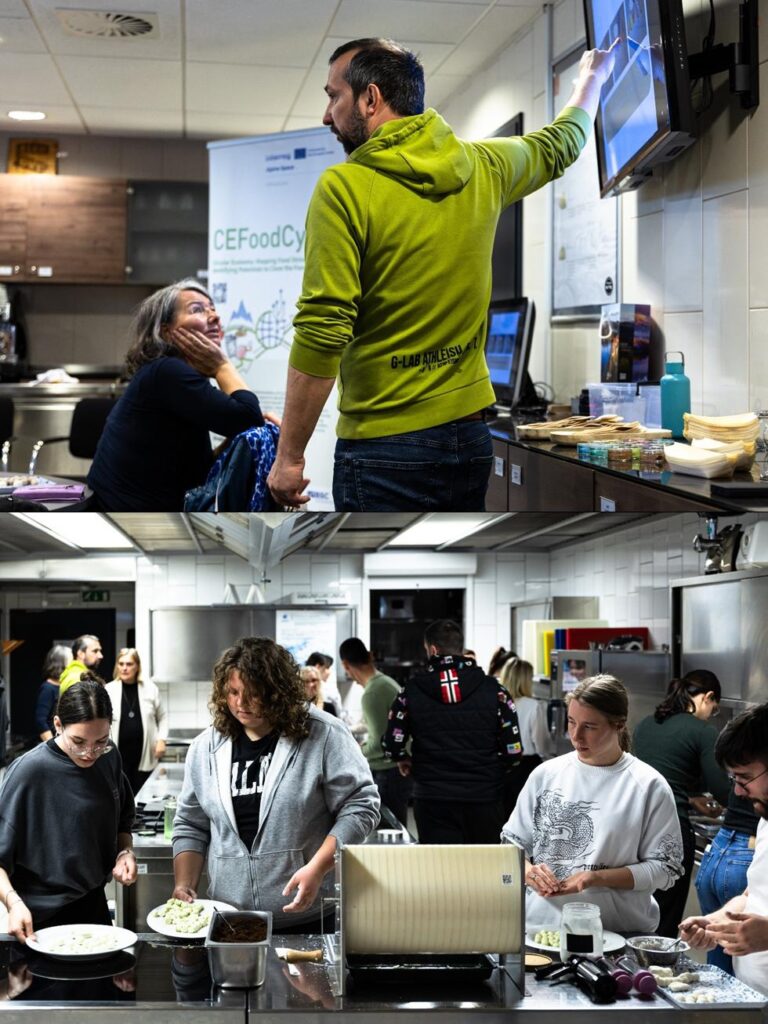 Step-by-step instruction following DIY guidelines on zero-waste cosmetics preparation and execution by participants at the Workshop in Bled.Slovenia
Discover more and contact
National institute of Chemistry, Department for Catalysis and Chemical Reaction Engineering
Research group for Bioplastics, biocomposites and zero-waste technologies
Group lead: Dr. Uroš Novak
Follow us on Instagram
Follow us on our Youtube channel
Contact for further information: info@remedies.com; uros.novak@ki.si