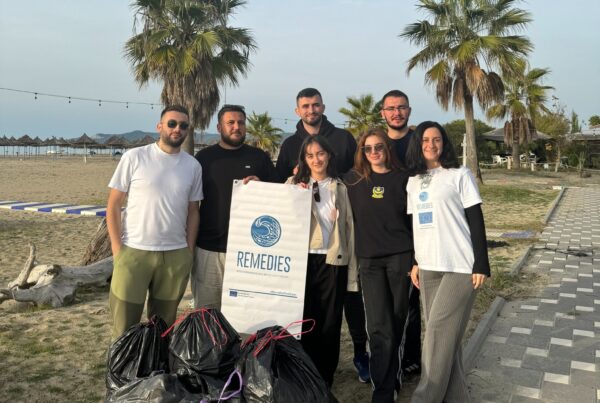

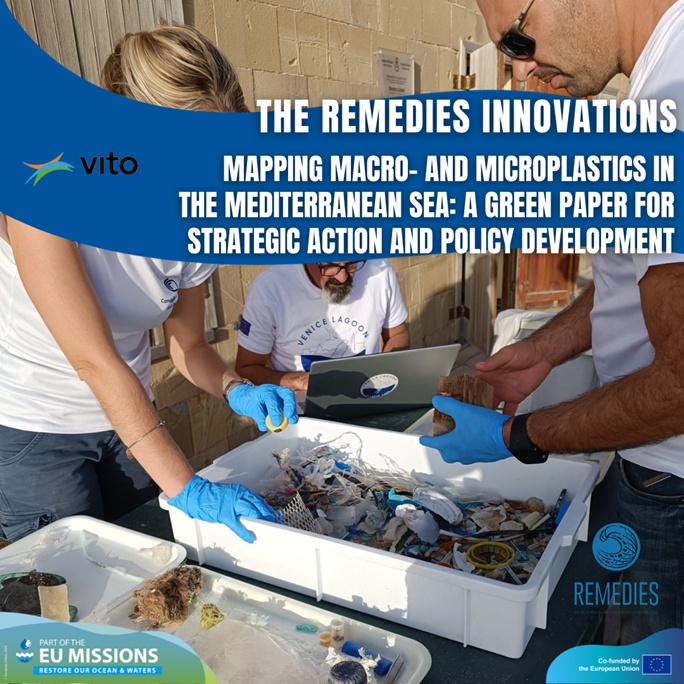
 Figure 1 – REMEDIES Green Paper innovation visual on mapping macro- and microplastics in the Mediterranean Sea.
Innovation snapshot
The Green Paper on Mapping Macro- and Microplastics in the Mediterranean Sea is a strategic knowledge product developed within REMEDIES to support better detection, monitoring and policy action on marine plastic pollution. It synthesizes current knowledge on the distribution, sources and impacts of plastic pollution in the Mediterranean and turns it into practical guidance for decision-makers, environmental bodies, researchers and stakeholders involved in marine conservation.
Related REMEDIES pillar: Detection and Monitoring
Partner(s)/Owner(s): VITO, in collaboration with WP1 partners
Innovation type: Green Paper / strategic resource / policy and monitoring guidance
Made for: Environmental protection bodies, policymakers, researchers and marine conservation stakeholders
Primary function: Knowledge synthesis, data-gap identification, mapping methodology guidance and policy support
Marketplace relevance: A practical entry point for public authorities, funders and institutions that need reliable monitoring strategies before investing in targeted plastic pollution interventions
The challenge it addresses
The Mediterranean Sea faces a persistent and complex plastic pollution problem. Macroplastics affect coastal landscapes, marine biodiversity, fisheries and tourism, while microplastics are harder to observe, monitor and manage because they can enter food chains and spread across marine compartments.
- Data deficiency: existing data remain fragmented across countries, monitoring systems, research projects and local initiatives.
- Methodological inconsistency: different monitoring approaches make it difficult to compare results and build a basin-wide evidence base.
- Policy fragmentation: without reliable mapping and shared protocols, policy responses can remain reactive, localised or disconnected.
- Need for collaboration: cross-border marine pollution requires coordinated monitoring, common standards and shared action across public bodies, researchers, NGOs and private-sector actors.
- Investment uncertainty: funders and public authorities need credible baseline information before supporting monitoring infrastructure, clean-up action, prevention measures or circular solutions.
The solution
The Green Paper provides a structured overview of current knowledge on macro- and microplastics in the Mediterranean and connects this knowledge with actionable monitoring, policy and implementation pathways. It is not a hardware technology. It is a decision-support and policy-development tool that helps users understand where plastic pollution is concentrated, which sources and impacts are most relevant, which data gaps must be closed and which monitoring approaches can be used or improved.
The Green Paper analyses innovative methodologies for mapping plastic pollution, including remote sensing technologies, citizen science initiatives and advanced analytical techniques. It also highlights the need for cross-border collaboration and standardized monitoring protocols, so that plastic pollution data can become more comparable, usable and policy-relevant.
Unique value proposition
- Strategic clarity: translates fragmented knowledge into a usable resource for planning, policy development and investment decisions.
- Monitoring-oriented: focuses on mapping macro- and microplastics, data gaps and methodological options rather than isolated awareness-raising.
- Policy relevance: supports targeted strategies and interventions to mitigate marine plastic pollution in the Mediterranean.
- Cross-border value: promotes cooperation between countries and actors working across the same sea basin.
- Practical for funders and authorities: helps identify where further data collection, capacity building, monitoring tools or prevention measures are needed.
- Compatible with citizen science: recognizes the role of stakeholder participation and citizen science in strengthening marine litter data collection.
- Foundation for exploitation: can support advisory services, training, capacity building and replication of mapping approaches in additional regions.
Technical and methodological characteristics
- Knowledge scope: distribution, sources and impacts of macro- and microplastics in the Mediterranean Sea, with attention to REMEDIES case study areas.
- Mapping methodologies: remote sensing, citizen science and advanced analytical techniques for plastic pollution monitoring.
- Data-gap analysis: identification of missing or insufficient information that limits effective marine plastic pollution management.
- Protocol alignment: emphasis on standardized monitoring protocols to improve comparability and reliability of data.
- Stakeholder relevance: designed for policymakers, environmental bodies, researchers, NGOs, conservation actors and other institutions working on marine litter.
- Policy-development function: supports strategic action, better waste management, plastic input reduction and resilience of marine ecosystems.
- Open-access pathway: designed to be made freely available to guide public and institutional action.
Use cases and target users
- Environmental protection bodies: use the Green Paper to define monitoring priorities and identify where additional data are needed.
- Policy makers and public authorities: use the recommendations to shape plastic pollution reduction strategies, waste management planning and regional cooperation.
- Research institutions: use the synthesis to align studies, identify research gaps and compare mapping methodologies.
- Marine conservation stakeholders: use the resource to support interventions in coastal and marine areas affected by plastic pollution.
- NGOs and citizen science initiatives: align local monitoring and awareness activities with broader scientific and policy needs.
- Funders and investors: understand the evidence base and policy relevance behind future monitoring, prevention and remediation projects.
- Consultants and technical partners: build advisory services, training modules and methodological support around mapping and monitoring.
Deployment and exploitation pathway
The exploitation pathway is based on turning the Green Paper into a practical resource that can guide policy, capacity building, advisory work and coordinated action across the Mediterranean.
- Open access publication: make the document freely available to policymakers, researchers and environmental organisations.
- Consultancy services: support public bodies and stakeholders to adapt mapping methodologies and recommendations to local or regional contexts.
- Capacity building: organise workshops and training sessions on mapping methodologies, monitoring protocols and policy recommendations.
- Policy advocacy: present findings at relevant international and regional forums to promote stronger cooperation and regulatory action.
- Replication: use the Green Paper as a reference model for other Mediterranean areas, demo sites, associate regions or coastal communities.
- Integration with REMEDIES tools: connect the findings with wider REMEDIES monitoring, citizen science, data collection, clean-up and prevention activities.
Discover more and contact
Contact for further information: info@remedies.com