

The Cyclades Demo Site in Greece focuses on Detection and Monitoring, Collection and Valorisation, and Prevention and Zero Waste, addressing beach litter, microplastics, and floating plastic hotspots across one of the most tourism-intensive island regions in the Aegean Sea. The Cyclades include around 220 islands, while the wider Cyclades and Dodecanese region attracts millions of visitors every year, placing strong seasonal pressure on waste management systems, beaches, ports, wastewater infrastructure, and marine ecosystems. Through REMEDIES, partners including National Technical University of Athens (NTUA), Alchemia Nova Greece, Impact Hub Athens (IHA), and Marine Conservation Greece (MCG) are working to reduce plastic leakage, monitor pollution pathways, introduce zero-waste solutions, and support local engagement across islands such as Mykonos, Syros, Rinia, and Santorini.
Watch a visual overview of the Demo Site:
The Demo Site builds on existing work from HYDROUSA and LIFE PAVEtheWAySTE, while introducing new REMEDIES technologies and community-based actions. The island context is particularly important because plastics and microplastics threaten marine life, degrade beaches, and place pressure on NATURA 2000 areas and landscapes of high natural value. The planned activities include beach clean-ups, microplastic removal from wastewater, zero-waste cosmetics workshops, testing of biodegradable fishing gear, social activities with schools, fishermen, municipalities and NGOs, monitoring of plastic pathways in the Aegean Sea, and the deployment of reusable cups and bottles supported by circular washing services. The expected outputs include more than 80% removal of microplastics from municipal wastewater, prevention of approximately 5,000 single-use plastic water bottles and more than 4,000 cups, collection of more than 3,000 kg of marine litter from at least five Cycladic islands, scanning 500.000 m² of coastline, and tracking currents for plastic hotspot identification over more than 10,000 km.
A key part of the Cyclades work is the identification and monitoring of plastic movement in the Aegean Sea. Marine Conservation Greece (MCG) began using GPS-equipped buoys to trace the movement of waste through rivers, waterways, and marine currents, helping to map the routes followed by floating litter before it reaches sensitive marine and coastal areas.
The monitoring programme involved the deployment of more than 200 buoys across the Cyclades, several Greek rivers, and other areas of the Aegean Sea. Its aim was to monitor not only waste entering the Aegean from Turkey and the Dardanelles, but also litter transported into Greek waters through transboundary rivers, as well as waste associated with tourism and other human activities in Greece.
The activities were supervised and coordinated by MCG, while their implementation and public outreach were supported by national Greek radio and television networks. Environmental organisations and groups active in coastal fishing also contributed to the deployment activities, monitoring efforts, and wider dissemination of the initiative.
These activities provide valuable evidence on plastic pollution pathways and help identify accumulation zones and floating-litter hotspots, supporting the development of more targeted prevention, monitoring, and clean-up interventions.
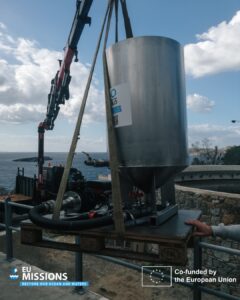
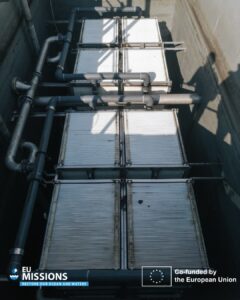
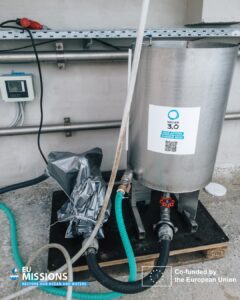
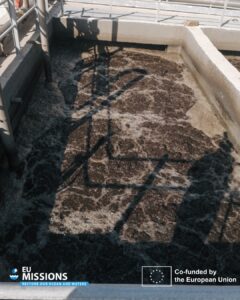
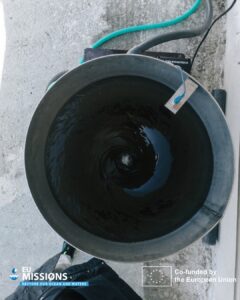
The Demo Site also works on microplastic removal at the source. In January 2024, a microplastic removal system was installed at the wastewater treatment plant of Mykonos in collaboration with Wasser 3.0. The reactor treats water after biological treatment and before discharge into the sea, collecting microplastics at its centre and preventing them from entering the marine environment. This local installation is connected to the wider REMEDIES innovation Wasser 3.0 PE-X®, a two-stage detection and removal process that uses fluorescent dyes for monitoring and Clump & Skim Technology to remove >80% of the microplastic load from municipal wastewater (secondary effluent of Mykonos WWTP). The solution has also been recognised through the BlueMissionMed catalogue of Innovative Transformative Solutions, strengthening its potential for replication across the Mediterranean.
The Cyclades Demo Site is also linked to REMEDIES work on fishing nets made with biodegradable polymers, a prevention and zero-waste solution developed by Cittadini (CIT) and Next Technology Tecnotessile (NTT), with the involvement of National Research Council of Italy (CNR), Bio-Mi, AITIIP, and the University of Maribor (UM). Traditional synthetic fishing nets can persist in the marine environment for decades, contributing to ghost fishing, marine litter, and microplastic contamination. The REMEDIES alternative is designed to maintain performance during use while decomposing in industrial composting conditions at end of life. The technology will be tested in both the Cyclades and Sardinia Demo Sites, connecting fishing communities, circular economy practices, and responsible end-of-life management for fishing gear.
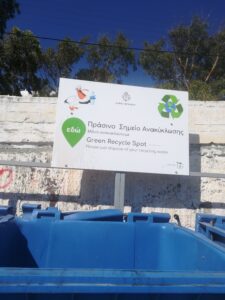
Beach monitoring and clean-up activities form a strong part of the Cyclades Demo Site. At Merchias Beach in northern Mykonos, Marine Conservation Greece (MCG) began seasonal monitoring on 29 January 2024, using a 100-metre beach section to assess the quantity, origin, and types of waste, with monitoring planned every three months. In Syros, the first Greek clean-up of 2024 took place at Agkathopes Beach, where the All For Blue volunteer team worked with Marine Conservation Greece (MCG) to protect a popular beach that also serves as habitat for Monachus monachus. In Mykonos and Rinia, teams connected to WWF Greece’s Adopt a Beach programme collected more than 155 kg of plastic litter and 48 kg of non-plastic litter through clean-up actions on Mykonos and Rinia, while another clean-up at Lygia Beach on Rinia Island on 24 June 2024 gathered nine volunteers and collected 7 kg of plastic litter, which was responsibly disposed of at the Green Recycling Point of the Municipality of Mykonos.
Additional clean-up activities were implemented in 2025, further expanding the Greek anti-litter work connected to REMEDIES and strengthening citizen engagement across island and coastal communities. In Mykonos, Marine Conservation Greece and All For Blue organised a clean-up at Korfos Beach on 1 April 2025. The action covered a 364-metre beach section, with an average cleaned width of 17 metres, and mobilised 87 participants. A total of 40.8 kg of plastic litter and 53.4 kg of other litter was collected, corresponding to 94.2 kg of waste removed from the coastal environment.
The 2025 Greek clean-up activities also extended beyond the Cyclades. On 26 March 2025, a clean-up at Kremasti Beach in Rhodes involved 92 participants and removed 29.3 kg of plastic litter and 35.2 kg of other litter. This was followed by a clean-up at Enydreio Beach in Rhodes on 27 March 2025, where 152 participants collected 37.1 kg of plastic litter and 47.3 kg of other litter, and another action at Faliraki Beach in Rhodes on 28 March 2025, where 263 participants collected 67.4 kg of plastic litter and 174.6 kg of other litter. On 10 April 2025, a clean-up was also carried out at B’ Marathona Beach in Aigina, engaging 46 participants and collecting 53.6 kg of plastic litter and 19.3 kg of other litter.
Together, these five additional beach clean-ups covered 1,152 metres of coastline and mobilised 640 participants, resulting in the removal of 228.2 kg of plastic litter and 329.8 kg of other litter from Greek coastal areas. These activities complement the Cyclades Demo Site work by extending litter removal, awareness-raising, and volunteer mobilisation to additional Greek islands and coastal locations facing similar pressures from marine litter, tourism, and waste accumulation.
Underwater clean-up actions also contributed to the removal of marine litter from the Cyclades marine environment. In Mykonos Marina, diver-led operations were carried out on 15 April 2023 and 26 May 2024, collecting 225 kg and 221 kg of plastic litter respectively. Further underwater actions were recorded in the wider Cyclades island complex, including Tragonisi Island on 18 August 2025, where seven divers collected 8.4 kg of plastic litter, and Delos Island on 23 August 2025, where four divers collected 2,260 kg of plastic litter.
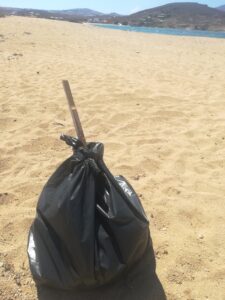
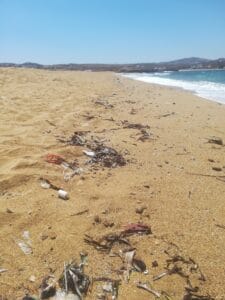
The clean-up work expanded through the #20TonnesChallenge and the Greek anti-litter campaigns led by Impact Hub Athens (IHA), Marine Conservation Greece (MCG), All For Blue, and WWF Hellas. In July 2024, a clean-up at Ftelia Beach, East Side, Mykonos covered a 130-metre stretch and collected 2 kg of plastic litter and 7.3 kg of other waste, while the broader All For Blue clean-up operations in the Cyclades continued to mobilise volunteers across different island locations. The second Greek anti-litter campaign was launched in September 2024 through a collaboration between All For Blue, Impact Hub Athens (IHA), and Marine Conservation Greece (MCG), followed by five clean-ups across Greece and a west-side action at Ftelia Beach on 20 October 2024, where three volunteers collected 6 kg of plastic litter and 19 kg of other waste along a 230-metre stretch. The results of the first Greek anti-litter campaign, delivered by Impact Hub Athens (IHA) and WWF Hellas from May to early October 2024, show how hundreds of volunteers were mobilised across multiple sites, linking local clean-up action with the wider REMEDIES mission to remove marine litter and promote behavioural change.
Knowledge-sharing supported these field activities. The Greece edition of the PLASTIC FANTASTIC webinar on plastic identification took place on 26 June 2024, facilitated by Impact Hub Athens (IHA) with the University of Maribor (UM), Venice Lagoon Plastic Free (VLPF), Marine Conservation Greece (MCG), and All For Blue. The webinar was designed for volunteers, Adopt a Beach participants, and ocean enthusiasts, providing practical knowledge on plastic types, recyclability, conscious consumption, and scientific methods for identifying and categorising plastic waste during clean-ups. It also presented the Cyclades Demo Site, the local technologies and innovations applied, and ways for participants to get involved. This monitoring and citizen science approach is further supported by the REMEDIES Shoreline Marine Litter App v.1.0 video, which presents the digital tool used to support standardised litter logging and data collection.
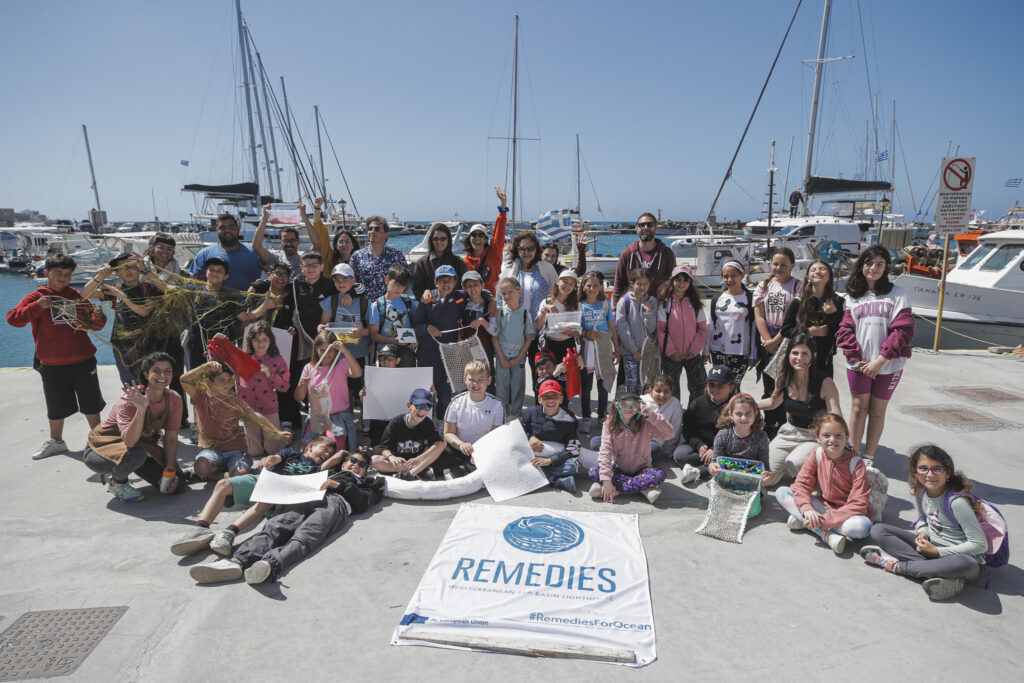 In May 2026, the Cyclades work entered a new phase in Santorini through the kick-off of the REMEDIES Plastic Lab at the Cyclades Demo Site. Hosted at the Vlychada Fishing Shelter from 14 to 17 May, the Plastic Lab operated as a hands-on plastic valorisation workshop within the Santorini Blue Loop Living Lab. Co-organised by Impact Hub Athens (IHA), Aegean Rebreath, the Municipality of Thira, the Thira Municipal Port Fund, SYN FAB LAB, and the Blue Municipalities Network, and connected to PHAROS, the activity brought together the local community, schools, visitors, fishermen, technical students from Florida, and invited guests. Participants explored how plastic waste collected from the local environment can be sorted, processed, upcycled, and transformed into learning, creativity, and circular action.
The Santorini programme combined several layers of engagement. Young sailing athletes from the Nautical Club of Santorini joined a clean-up at Vlychada Fishing Shelter on 16 May, collecting 62 kg of plastic and 20 kg of mixed waste before engaging with the Plastic Lab process. Aegean Rebreath led a seabed clean-up with 20 divers, complementing the coastal activities and showing the need for coordinated work across the shoreline, port area, and seabed. The programme also opened conversations with local fishermen about the sources and impacts of marine litter, hosted a screening of “Ocean with David Attenborough” in collaboration with the Cyclades Preservation Fund and the Revive Our Ocean Greece initiative, and launched the artistic residency and mural process with artist Taxis through the Craft the Future workshop. In Santorini, the Plastic Lab made marine litter visible as both an environmental challenge and a material for education, experimentation, and local circular innovation.
Together, the Cyclades Demo Site shows how island communities can act on plastic pollution through monitoring, wastewater innovation, GPS tracking, shoreline data collection, beach and seabed clean-ups, biodegradable fishing gear, plastic valorisation, and zero-waste alternatives. From Mykonos, Syros and Rinia to Santorini, REMEDIES is building a place-based pathway for reducing plastic leakage, engaging citizens and visitors, supporting local stakeholders, and showing how top tourist destinations can move towards circular and zero-waste practices.