
Could local resources or unused waste streams be transformed into sustainable alternatives to plastic products?
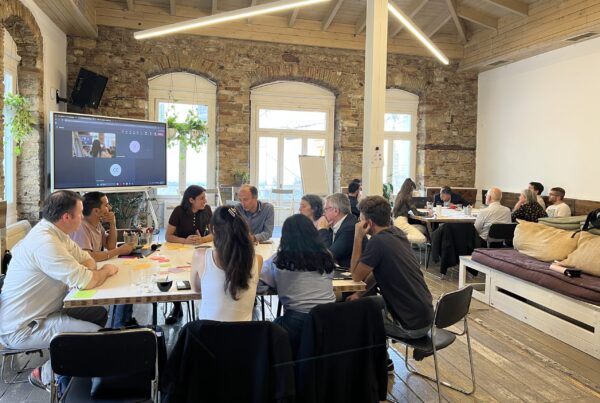
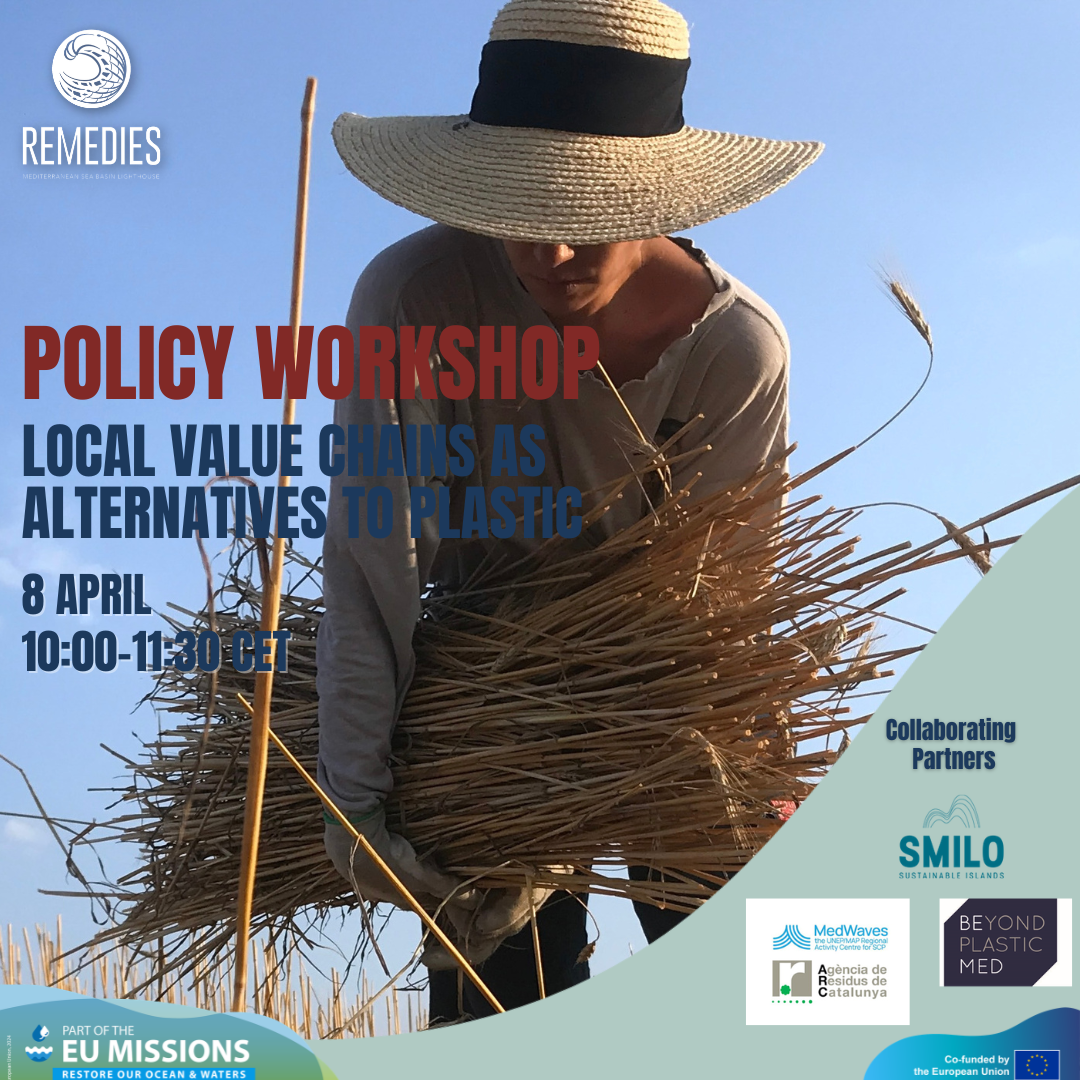
The 4th REMEDIES Policy Workshop, organised on 8 April 2026 by SMILO in collaboration with MedWaves and Beyond Plastic Med, brought together stakeholders from Mediterranean islands working on plastic pollution reduction.
The objective of the webinar was to explore how territorially rooted value chains can contribute to reducing plastic pollution in Mediterranean coastal and island territories by developing sustainable, locally adapted alternatives to single-use plastics.
The discussions highlighted that tackling plastic pollution requires moving beyond simple material substitution. Local value chains offer a systemic approach combining prevention, reuse, local resource valorisation, circular economy principles, and territorial resilience.
The webinar also provided an overview of the evolving international, Mediterranean, and European regulatory frameworks addressing plastic pollution, including:
- The Barcelona Convention and the Regional Plan on Marine Litter;
- The EU Single-Use Plastics Directive (SUP);
- The Packaging and Packaging Waste Regulation (PPWR).
Attention was given to concrete Mediterranean initiatives demonstrating how local resources, traditional knowledge, innovation, and community engagement can support regenerative and zero-waste approaches.
The 4th REMEDIES Policy Workshop at a glance
The first part of the webinar highlighted the growing multi-level governance framework addressing plastic pollution at international, Mediterranean, and European levels.
Speakers stressed that current policy developments increasingly prioritise: waste prevention; reuse systems; circular economy approaches; reduction of unnecessary packaging and local alternatives to single-use plastics.
At Mediterranean level, the Barcelona Convention Regional Plan on Marine Litter was presented as a key framework supporting coastal and island territories in developing prevention-oriented solutions and local circular economies.
At European level, the SUP Directive and the PPWR were identified as major drivers accelerating the transition away from disposable plastic products, particularly in tourism, hospitality, takeaway food, and event sectors.
The second part of the webinar focused on practical examples of regenerative local value chains developed across the Mediterranean.
The webinar recalled that regenerative local value chains are territorially rooted systems designed to prevent waste at source and replace single-use plastics through: local sourcing; short supply chains; reuse systems; biodegradable or compostable biomaterials and circular resource management.